
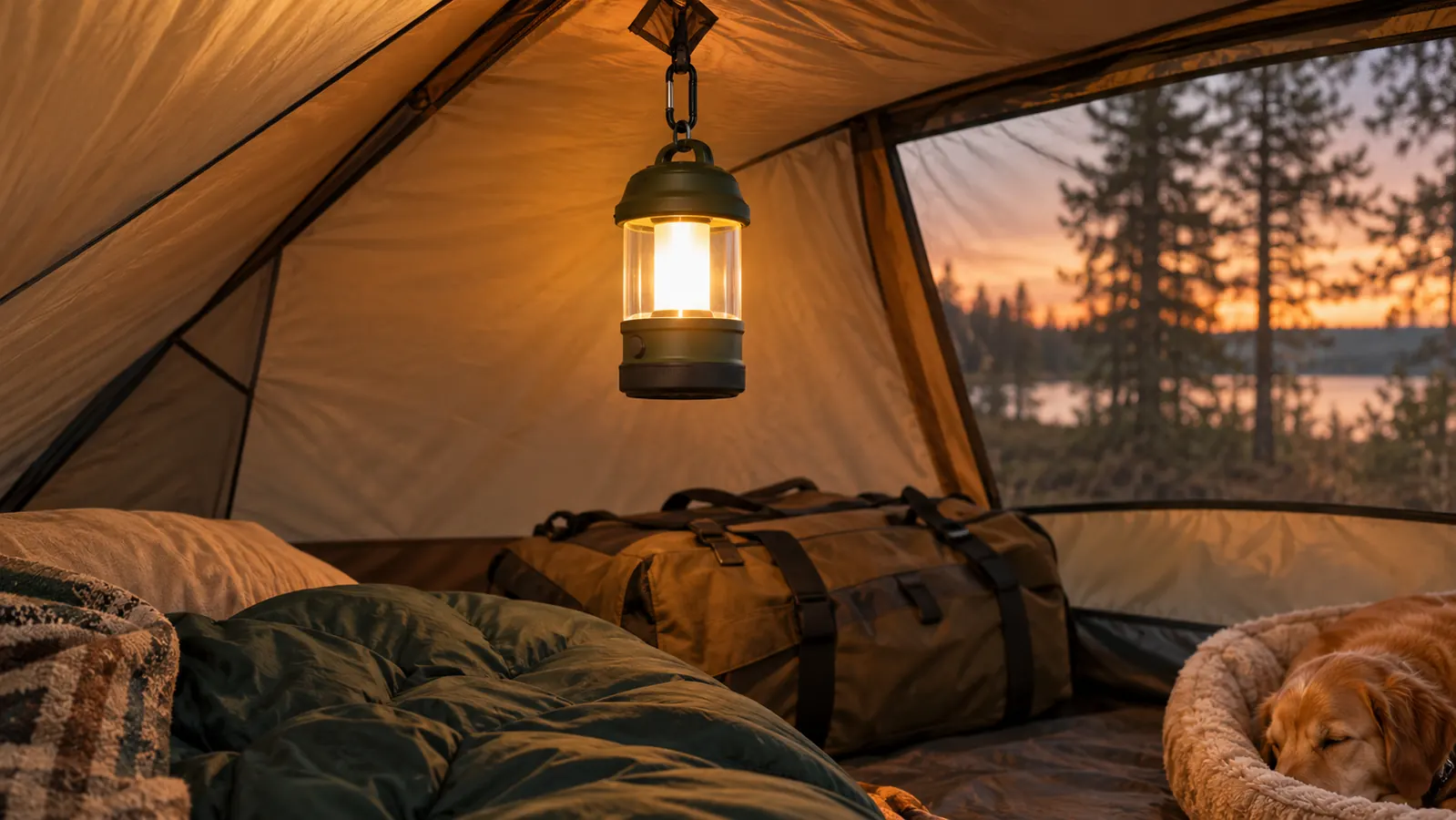
I bought the Lepro 1000LM lantern in March because the old propane lantern in the garage had finally quit, and I wanted something I could hang inside the tent without a flame three feet from my dog's head. That was the whole decision. I charged it overnight, dropped it in the back of the Forester next to the camp box, and took it to a state park outside Chattanooga that Saturday. Biscuit was asleep in the passenger seat before we reached the interstate.
Six months and fourteen trips later, I have opinions. Most of them are good. Two of them are the sort of thing I wish a product page had said out loud, because they would have changed how I packed in April. I am a retired school bus mechanic from Chattanooga, so I notice hardware and I could not care less about packaging. Here is what the Lepro lantern actually does, where it got on my nerves, and who should spend their money on something else.
The Quick Verdict
Bright enough to run a whole campsite, rechargeable, and it came through a wet Tennessee season in my gear tote without a complaint. Just do not buy it expecting twelve hours at full brightness, and do not buy it expecting cozy.
Amazon Check Today's Price →The light that goes up before I unclip the dog
Rechargeable, two hooks, four modes, and enough output to check a trailer hitch in full dark. This is the one that lives in my camp box now.
Amazon Check Today's Price on Amazon →How I Have Actually Used It
The top of the lantern has a hook and the base has a second one. That sounds like a small detail until you have tried to hang a light over a picnic table at nine at night with a dog circling your ankles. I hang the Lepro from the tent ceiling loop on the low setting, and I hang it upside down off a shepherd's hook over the table when we eat. The hook on the base is the one I use most, because upside down it throws light down onto plates instead of up into the branches.
A good half of our trips start with me arriving after dark, because I am retired and still manage to leave the house late. The lantern is the first thing out of the tote. I set it on the tailgate while I back the vehicle into the site, and I have enough light to see the wheel chocks, the leveling blocks, and a dog who wants to sniff every post in the loop before he will settle.
One trip in particular sticks with me. Third weekend in May, Cosby Campground on the Tennessee side, and we rolled in at 9:40 with the gate code still in my hand. I hooked the lantern to the shepherd's hook, set it two steps down from high, and had the tent standing in nineteen minutes by the clock on the dash. I timed it out of curiosity the next morning on a dark walk to the bathhouse and back. What I came away with is that the light reached the far end of a six foot picnic table and put enough glow on the ground that I found a dropped tent stake on the first pass. That is the number I care about, not the lumen figure.
The 360 degree beam is the other feature that earns its place. There is nothing to aim. I set it down and the whole table is lit, including the far end where Ray leaves his reading glasses. A flashlight gives you one narrow circle and you spend the evening sliding it around. This one does not need sliding.
There are four light modes. I could not tell you what the manufacturer calls each one and I do not think it matters. What matters is that the lowest one is dim enough to sit in a tent at eleven at night without feeling like a stadium, and the highest one is bright enough that I have used it to check a trailer hitch in full dark. The two in the middle are what I cook by.
Biscuit is the reason I care about the low setting at all. An Australian Shepherd mix who runs warm all day turns into a dog who wants to be pressed against my leg the minute the temperature drops. A hard white light in a small tent gets him up and pacing. The lowest setting keeps the tent dim enough that he settles on his bed and stays there, and I can still find my headlamp and my book.
Charging happens at 5 volts and it is not fast. I plug it in Sunday afternoon when we get home and it is ready by Monday morning. If you are the sort who decides to leave Friday at noon, top it off Thursday night instead of hoping.
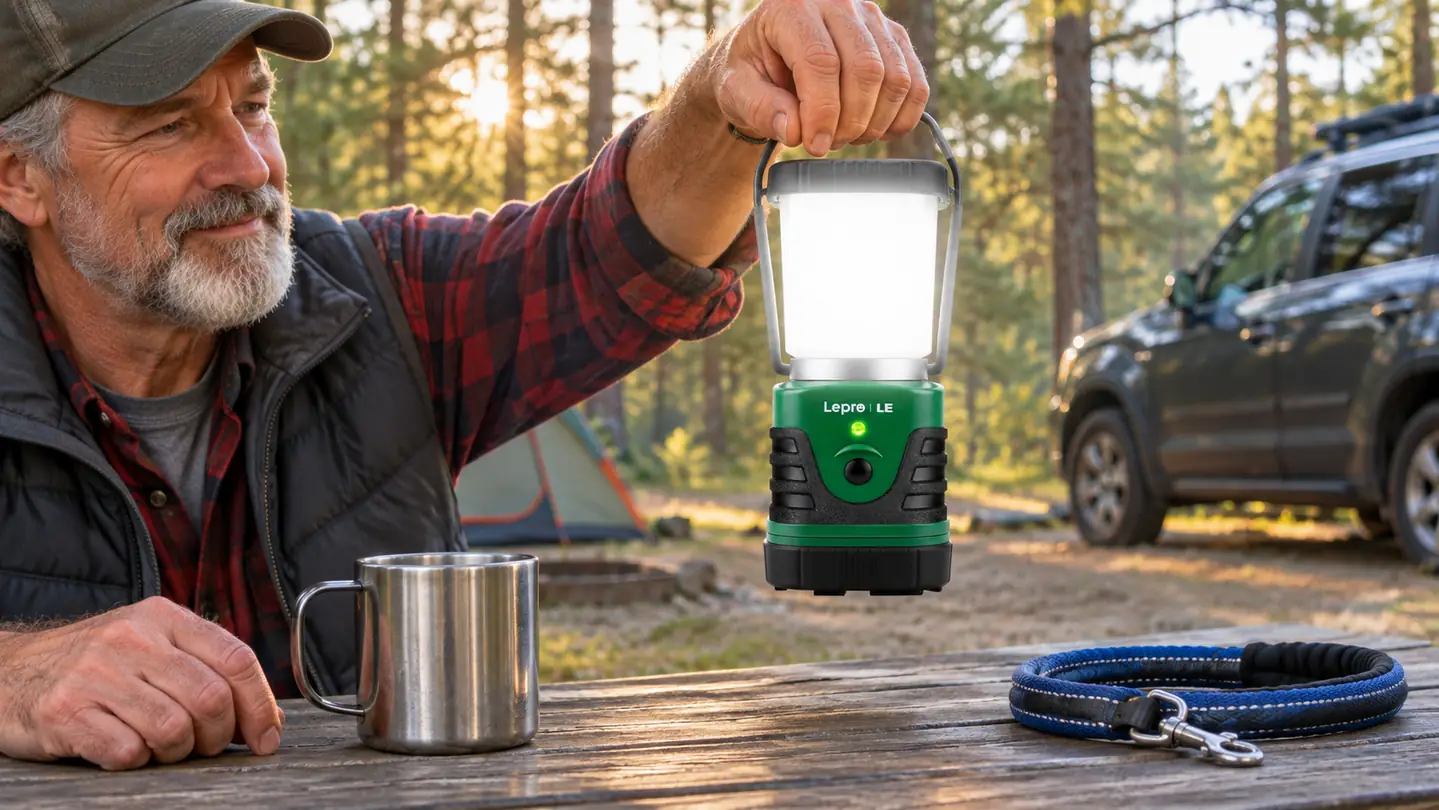
The 1000 Lumen Number, and What It Really Means
The listing says 1000 lumens and up to 12 hours. Both numbers are honest. What the listing does not spell out is that you do not get both at once, and that is the most useful thing I can tell you about this light.
On the brightest setting it is genuinely strong. I have lit an entire campsite with it, and I have walked to a bathhouse on an unlit path with it held down at my side. That setting also drains the battery in a few hours, not twelve. On the setting I actually live at, one or two steps down, it ran a whole weekend for me: two nights of cooking, dishes, a card game, and an hour of reading in the tent, and it still had charge when we packed up Monday.
I want to be fair about the twelve hour figure, because it is reachable. On a mild night in September I turned it on low at eight in the evening and it was still going at seven the next morning when I made coffee, with no dimming I could see. That is the setting the number belongs to, and it is also the setting I use most, so I am not complaining. I am just telling you where the number lives.
The 4,400 mAh battery is the part I would point a friend toward. It is the reason a weekend works without a charger at all. Two nights and a morning without hunting for an outlet is exactly what I needed and never got from a lantern that ran on D cells. On a three night trip in July at Fall Creek Falls I charged it Friday morning before we left, used it both nights and the last morning, and it came home with charge left over. I do not have a number for that leftover. I just know it did not quit on me.
The light is cool and white. I notice it most at night, when everything past the rain fly is black and the inside of the tent turns into a bright white box. It is excellent for finding a lost sock or checking a paw. It is not cozy. My old propane lantern had a warm yellow glow that made a campsite feel like a room, and I miss that more than I expected to.
The whole thing weighs 550 grams, a bit over a pound, and the housing is plastic. The weight is a plus, because I am done hauling heavy gear out of a vehicle. The plastic is the part I think about. I dropped it once from table height onto a gravel pad and it survived with a scuff. I would not make a habit of it, and I would not stack the cast iron on top of it in the back of the Forester.
On the brightest setting I got about three hours before it started to dim. The twelve hour figure is real, but it belongs to the low setting, not the one most people buy the light for.
What Held Up Over Six Months
The water resistance claim held. I have had it out in two proper rains at Standing Stone and one soaking, foggy morning at Frozen Head where everything in camp was wet through by seven. The lantern hung under the rain fly, got splashed, and never flickered. I would not drop it in a creek. I also would not worry about it in weather.
The rechargeable battery changed how I pack. Two lithium-ion batteries are included, and there is no hunting for D cells at a gas station at ten at night. I keep a camp tote by the door. The lantern goes in charged and comes out charged. My old light lived in the same tote and I could never remember whether the batteries in it were any good.
The drop happened in June, at a site outside Townsend. I had it on the tailgate while I moved the cooler and it went off the edge onto gravel, about three feet. It landed on a corner, bounced once, and kept working. The scuff is still there, one mark on one edge that I see every time I pick it up. That was the moment I stopped babying it and started trusting it. Six months later that corner is still the only damage on the housing.
One more thing held up, and it surprised me. The lantern does not rattle. I drive a Forester on Forest Service roads that are mostly potholes with gravel in them, and the lantern rides loose in a plastic tote the whole way. Nothing inside has come loose and nothing buzzes on washboard. Small thing. It is the small thing that tells you how the rest of it was put together.
The hooks have not loosened either. That sounds like nothing. On cheap lanterns it is not nothing, because a plastic hook that stretches puts your light on the ground in the middle of dinner. I have hung this one every trip for six months, at least once each trip upside down under its own weight, and both hooks are still tight.
The 360 degree spread also means it works as a room light rather than a task light. Hung from the ceiling loop it fills the tent evenly and I have never once had to angle it. For what I use a lantern for, that is the whole job. There are two LED light sources in the housing and neither has developed a dead spot. I had a cheaper light once where a section of the panel quit after one season and left a dark wedge in the tent for a year before I finally threw it out. Not this one. Not yet.
What I Liked
- 1000 lumens on the top setting, enough to light a whole campsite or check a hitch in the dark
- 360 degree beam, so there is nothing to aim and the whole table gets lit
- Rechargeable with two lithium-ion batteries included, no D cells to buy or forget
- A hook on the top and a second hook on the base, so it hangs right side up or upside down
- Water resistant enough to shrug off rain under a rain fly and a soaking foggy morning
- 550 grams, light enough to toss in a tote and forget about until dark
Where It Falls Short
- The 12 hour runtime is the low setting, not the bright one you bought it for
- Cool white light that turns a small tent into a bright box and is not remotely cozy
- Charging at 5 volts takes overnight, so plan ahead
- Plastic housing survived one drop and a scuff, but it is not something to stack gear on
- The low setting is still brighter than a nightlight inside a two person tent
Where It Falls Short
Cold weather. I camp into late October and I have been out on nights in the thirties. Rechargeable lithium does not love that, and I noticed the runtime drop on a cold night near the end of the season. It still worked, it just did not last as long. If you camp in real winter, keep the lantern in the sleeping bag until you need it, or bring a backup light.
That cold night was the second weekend of October, up near Roan Mountain, and the low was thirty-one by the thermometer I keep in the camp box. I switched it on at dusk on the setting I normally use and it stepped down sooner than it does in August. Nothing dramatic. Maybe an hour and a half earlier than I expected. I tucked it inside the sleeping bag with me for twenty minutes and it came back to normal, which is the trick I use now on any night forecast below forty.
Charging is slow enough that you should plan around it. Five volts, overnight, every time. I keep a short cable in the camp box now so it tops up on the drive home instead of sitting dead until Wednesday. Pack your own wall block. If you forget it you are charging off the vehicle or not at all.
The brightness cuts both ways. At a campground with neighbors close by, 1000 lumens on high is rude. I have been at a park near Townsend where the loop across from us ran a light like this at full power until midnight and lit the side of my tent like a parking lot. I use mine on low and I still turn it off when I go in. A bright light in a shared campground is the camping version of a loud radio.
The low setting is not as low as I would like inside a small tent. It is good. It is not a nightlight. If you want something that glows just enough to keep a nervous dog calm at two in the morning, this is brighter than that, and you will end up draping a shirt over it.
And there is no getting around the plastic. Six months of careful use and it still looks fine. Six months of a wet tote, a tailgate and a dog stepping on it would look worse. Treat it like a light, not like a step stool, and it will last.
Who This Is For
If you car camp out of a vehicle, keep gear in a tote, and want one light that covers the table, the tent, and the walk to the bathhouse, this is a sensible buy. It is bright, it hangs, it recharges, and it has come through a wet Tennessee season without complaint. The Lepro lantern solves the D battery problem and the flashlight in your teeth problem in one purchase, and it does it for two or three nights at a time without a charger.
It also suits dog camping in a way I did not expect. One light on low, hung from the tent ceiling, is enough for me to see Biscuit and not enough to wind him up. I stopped carrying a separate tent light in June.
Who Should Skip It
If you backpack, skip it. At 550 grams with a plastic housing this is car camping gear, and there are lighter lights that will not annoy you on a climb.
If you want warm, dim, cozy light, skip it. That is not what this is. If you need a full night at the brightest setting, skip it or plan on a second battery. And if you camp in a busy loop with neighbors close by, be honest with yourself about whether you will keep your hand off the high setting at eleven at night.
None of that is a criticism of the lantern. It is a tool doing a specific job well, and the job it does well is lighting a car campsite for two or three nights without a cord or a fuel can.
If you are done buying D cells, start here
Six months, fourteen trips, one scuffed corner. The Lepro lantern has earned its spot in the tote, and it will earn yours.
Amazon Check Today's Price on Amazon →