
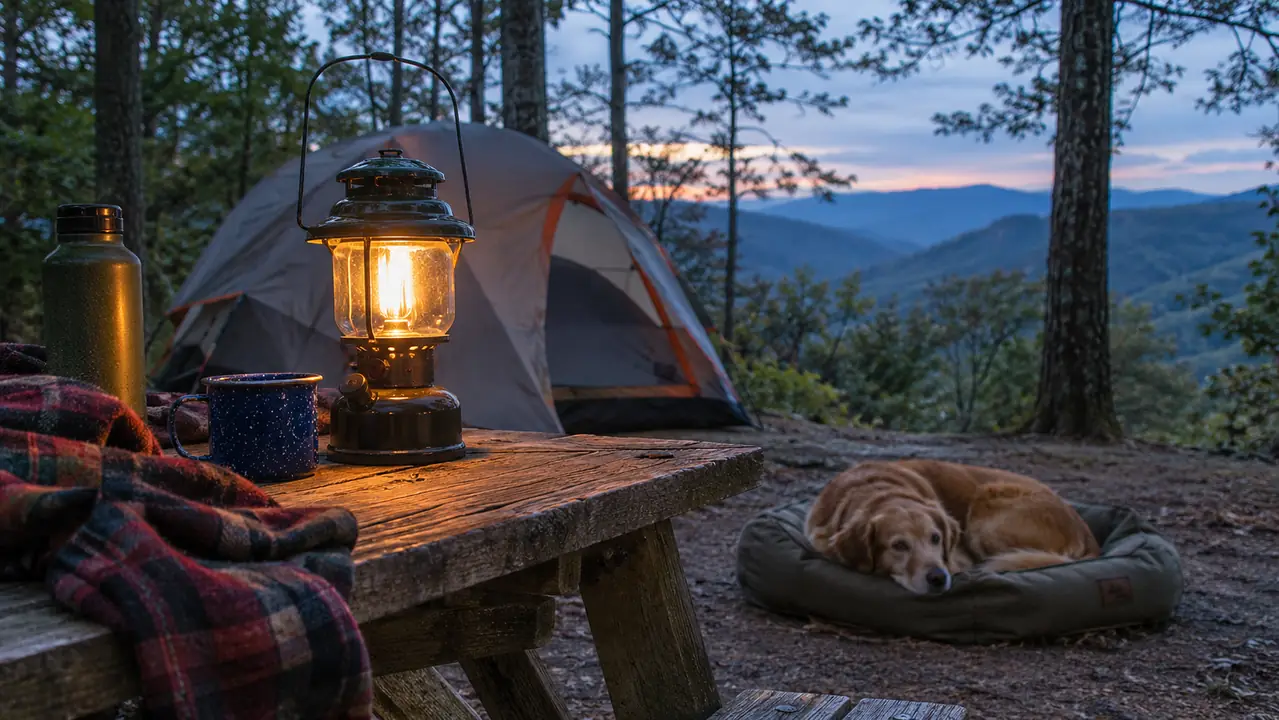
Two lanterns live in the back of my 2017 Subaru Forester: a Lepro 1000LM rechargeable and an older Coleman LED. One of them comes out of the tote on every single trip. The other one comes out on the nights I forgot to charge the first one. That is the short answer, and if you only read one line of this, make it that one: for car camping at a Tennessee state park with a dog and a folding table, the Lepro is the lantern I reach for.
The Coleman is not a throwaway, though, and I would not tell you to get rid of yours. There are two or three nights a season when I am glad it is in the truck. What follows is what I have actually noticed across three seasons of weekend trips, spring through late fall, mostly in Tennessee and western North Carolina, most of them just me and Biscuit, my 45 pound Australian Shepherd mix, with my husband Ray along on the longer ones.
Here is the part nobody tells you before you buy either one: the difference between these two lanterns is not really brightness. It is what happens on night two, when one of them is still full of light and the other one is a plastic shell with a dead battery inside.
| Lepro 1000LM | Coleman LED Lantern | |
|---|---|---|
| Brightness | Rated 1000 lumens with a 360 degree beam angle, so it lights the whole tent floor | Pleasant, even light, though dimmer than the Lepro side by side, and dimmer still as the cells fade |
| Power | Built in 4400mAh lithium ion battery, rechargeable | Runs on disposable cells, and mine takes several of them |
| Runtime | Rated 12 hours, and low mode has never run flat on a two night trip | Mine gets through a long weekend on one set of cells and keeps going |
| Resupply on the road | Whatever charge you left home with | Fresh cells from any hardware store or camp store in town |
| Hanging | Hook at the top and a second hook at the base | Single hanging point on the model I own |
| Weather | Rated water resistant, and it has survived mist and a spilled water bowl | Built for the outdoors, and mine has been out in real rain |
| Light modes | Four modes, and I use two of them constantly | Fewer settings on mine, which some folks prefer |
| Best for | Car campers who charge gear at home and want one light for the tent and the table | Campers who want a lantern that lives in the truck and never needs a charging routine |
How I Tested Both Lanterns
I am not a spec sheet tester. I am a retired school bus mechanic, which means I care about how a thing holds up and how easy it is to live with, not what the box promises. Twenty-nine years of crawling under buses taught me that any part looks fine on the day you install it, and the only honest test is the third winter. A lantern is no different. My method is boring and it takes a while: I hang a lantern in the tent, I use it to cook, I use it to read, I use it to find a dog's water bowl at eleven at night, and I pay attention to which one annoys me.
Three seasons of that, somewhere around sixty nights out, most of them two night trips. Rain at a national forest site outside Robbinsville in North Carolina. A cold snap at Fall Creek Falls in October that put frost on the picnic table by seven in the morning. A windy night at Standing Stone when the tent sides snapped all evening and I had to weight the corners down with firewood. Both lanterns have been dropped on gravel, both have been left out in a mist, and one of them was nudged off a picnic table by a dog who thought the handle looked worth investigating.
I also keep a spiral notebook in the tote, which sounds fussy until you try to remember in November which lantern annoyed you back in June. Every trip I write the date, the campground, roughly how many hours each lantern was on, and one line about how it went. That notebook is why I can tell you the low mode on the Lepro ran four nights straight on a single charge without me touching the cable, and why I know I burned a fresh set of cells in the Coleman over three nights at Cumberland Mountain in September. Without the notes I would have guessed, and my guesses would have been wrong.
Night two is where the comparison actually gets decided. One lantern is still full of light. The other one is a plastic shell with a dead battery inside.
Where Lepro Wins
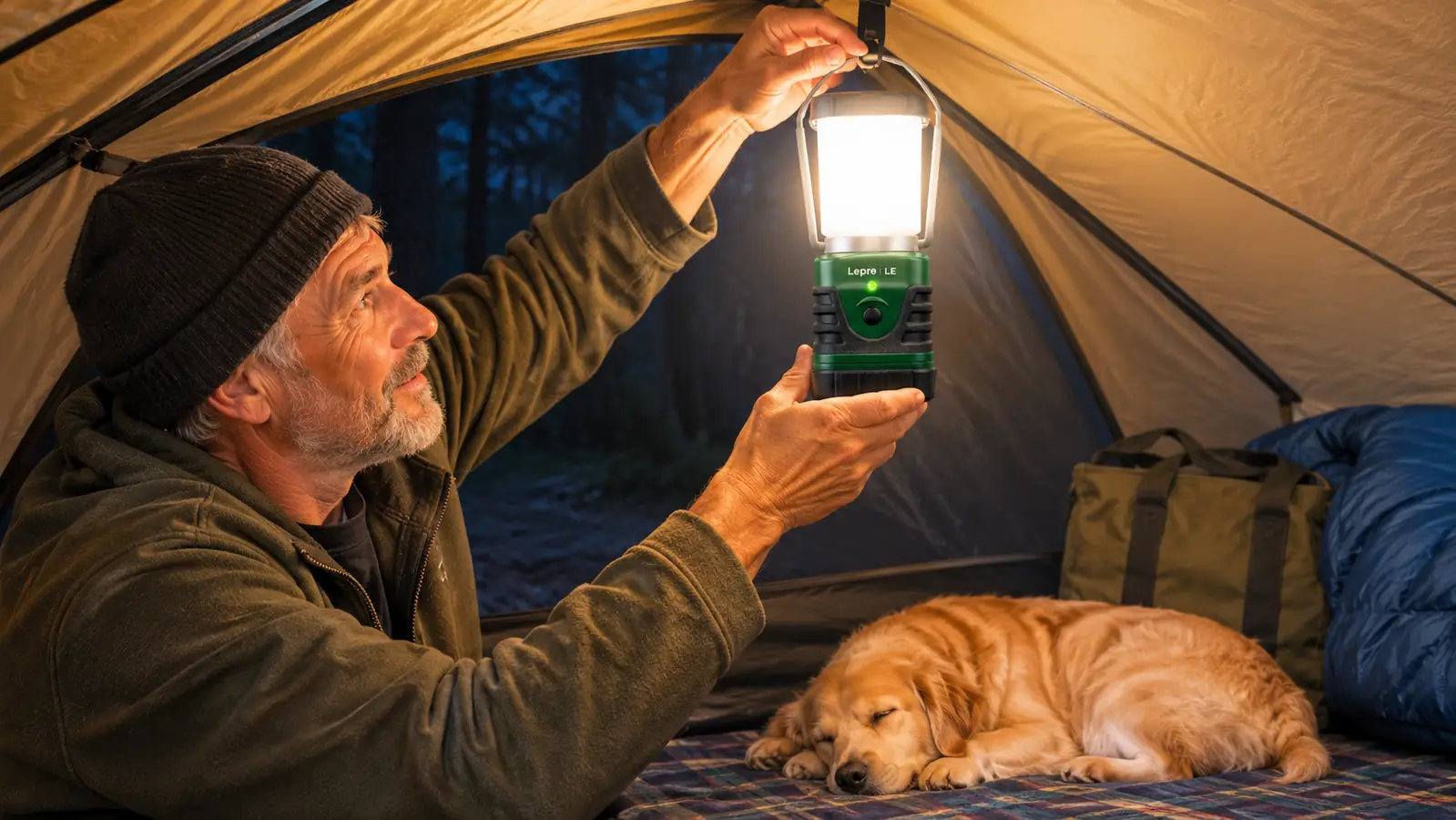
The Lepro is rated at 1000 lumens with a 360 degree beam angle, and that second number matters more than the first. Light that goes out in every direction means I can hang the lantern from the loop at the top of the tent and the whole floor lights up. No hot spot, no dark corner where Biscuit's bed goes. When I cook after dark, I set it on the picnic table and it lights the table, the stove and the ground around my feet at the same time.
There is a specific evening I keep coming back to. Late September, overcast, dark by seven, and I was cooking chili on a two burner stove with the lantern sitting on the table. I could see the bottom of the pot, the lid I had set down, the spoon rest and my own boots, all at once, off one light. With the Coleman I would have moved it twice by then, once to see what was in the pot and once to see what I was reaching for.
Then there is the battery. The 4400mAh is built in and it recharges, which sounds like a small thing until your third trip of the season. The Lepro is rated at 12 hours of battery life, and on the low mode I have never run it flat across a two night trip. I charge it at home during the week, it goes in the tote, and it comes out ready. That is the entire routine. No stopping at a store on the way out of town, no digging through a drawer for the right size cell at the last minute.
The small details earned their keep too. There is a hook on the top and a second hook at the base, so I can hang it upside down from the tent ceiling and drop the light lower and softer, which is what I want at bedtime. Right side up it hangs high and throws light across the whole tent; I use both positions on the same trip, usually within an hour of each other. Four light modes, and I use two: the lowest for reading in the tent without waking the dog, and the brightest for cooking. It weighs 550 grams, a bit over a pound, which is nothing in a car camping tote. The housing is rated water resistant, and in practice that meant a misty night at Standing Stone and a tipped water bowl did not end it.
Where Coleman Wins
The Coleman takes disposable cells. When they die, I walk into a camp store or a hardware store in town and I am back in business in five minutes with no cable and no outlet. The Lepro cannot do that. If I leave Chattanooga with a lantern at half charge, then half a charge is the light I have for the weekend. That is a real tradeoff and I do not want to pretend otherwise. Worth saying out loud: Coleman makes more than one LED lantern, so check the one you are actually looking at before you assume it matches mine.
There is one trip I use as my own cautionary tale. Two years ago I pulled out of Chattanooga at four on a Friday afternoon, got to the site at dusk, and found the Lepro still sitting on the kitchen counter attached to the charging cable. The Coleman ran that entire weekend on cells I bought at a hardware store in town on Saturday morning. That is the trip that taught me to keep both lanterns, and it is why I do not tell people to throw out a battery light.
The second thing is staying power. Mine gets through a long weekend on a set of cells and keeps going, and the low setting is easy on the eyes at two in the morning when you are up because the dog heard something. It is also the lantern I hand to Ray or to a guest without a word of explanation. No charging routine, no indicator to interpret, no learning curve. For a lantern that lives in the truck and gets used four times a year, that simplicity is worth more than any spec on a box.
What I Liked
- Rated 1000 lumens with a 360 degree beam angle that fills a tent evenly
- Built in 4400mAh rechargeable battery rated at 12 hours of runtime
- Hooks at both the top and the base for hanging high or hanging low
- Four light modes, water resistant housing, 550 grams
- Nothing to buy before a trip if you charge it at home
Where It Falls Short
- You are limited to the charge you packed
- Recharging is one more thing to remember before a Friday departure
- The brightest mode is more light than a small tent needs
The Dog Factor
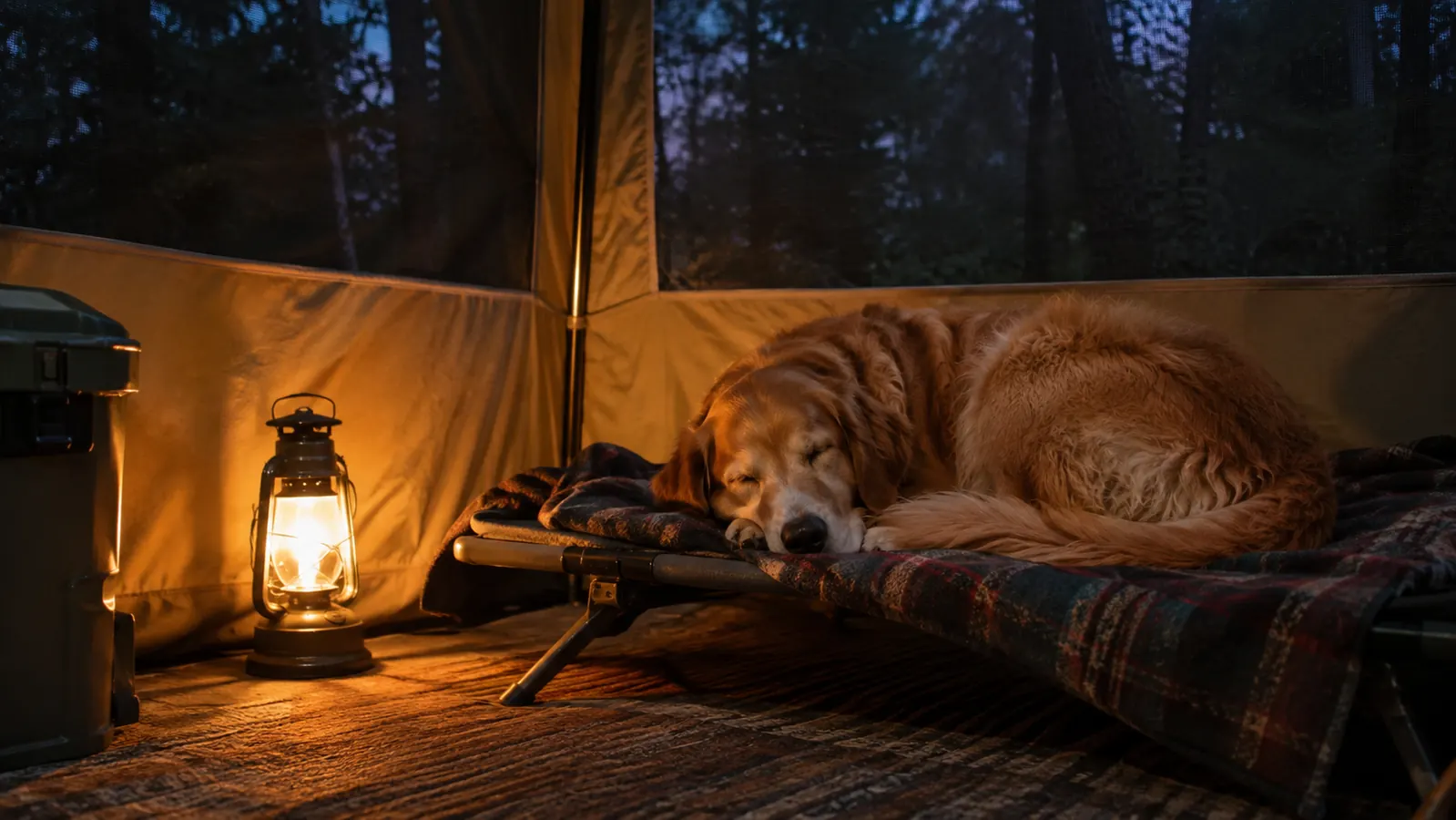
I camp with a dog who runs warm all day and gets restless once the sun drops. Biscuit is six, about 45 pounds, and he settles on his bed only when he can see the tent walls and the camp around him. That is not a small consideration with lighting. A lantern that throws one hard beam across the tent leaves half the floor dark, and a dog who spots a moving shadow at the edge of the light will be up and growling about it.
One night in particular sticks with me. A great horned owl started up across the hollow and Biscuit came off his bed at a dead run before I even knew what I was hearing. What settled him was not the light being bright. It was the light being even. He could see the tent wall, the tote, my boots, and nothing else moving in between. A hard beam leaves a dark edge, and a dark edge is where a dog's imagination lives.
The 360 degree spread is the reason the Lepro hangs from the tent loop instead of sitting on the floor. Even light, no sharp shadows moving around, and the low mode is dim enough that turning it on at midnight does not wake him. The Coleman does the same job at the table, where a brighter single point of light is what you want for cooking or for finding the leash in a tote. Two different jobs. Both of them mine.
The Lantern That Is Still Lit on Night Two
Hang it from the tent loop, light the whole floor, and stop rationing light on the second evening of a trip. The Lepro 1000LM is the one that comes out of my tote first every time, and it charges while I am home during the week.
Amazon Check Today's Price on Amazon →Who Should Buy Which
Buy the Lepro if you car camp out of a vehicle with a place to charge things, you want one light that handles the tent, the table and the walk to the bathhouse, and you are willing to make charging it part of packing. That is my situation exactly, and after three seasons it is the lantern I would replace first if it walked off. It suits people who pack deliberately and leave Friday afternoon with a plan.
Stay with a Coleman, or buy one, if your lantern lives in the truck between trips and you do not want a charging routine attached to it. If you camp once or twice a year, if you are the person who arrives after dark and needs light immediately, or if you would rather swap cells in a parking lot than hunt for a cable, the disposable battery model is the more forgiving tool. I keep mine for exactly that reason.
What I would not do is buy both expecting them to be the same. They solve different problems. One is a light you plan around. The other is a light you can forget about until you need it, and then feed. Knowing which camper you are is most of the decision, and it took me three seasons and a spiral notebook to figure out that I am the first kind.
One Lantern for the Tent, the Table and the Walk to the Bathhouse
1000 lumens with a 360 degree spread, a 4400mAh battery rated at 12 hours, and hooks at both ends. Charge it at home, hang it at camp, and stop thinking about light for the rest of the weekend.
Amazon Check Today's Price on Amazon →