
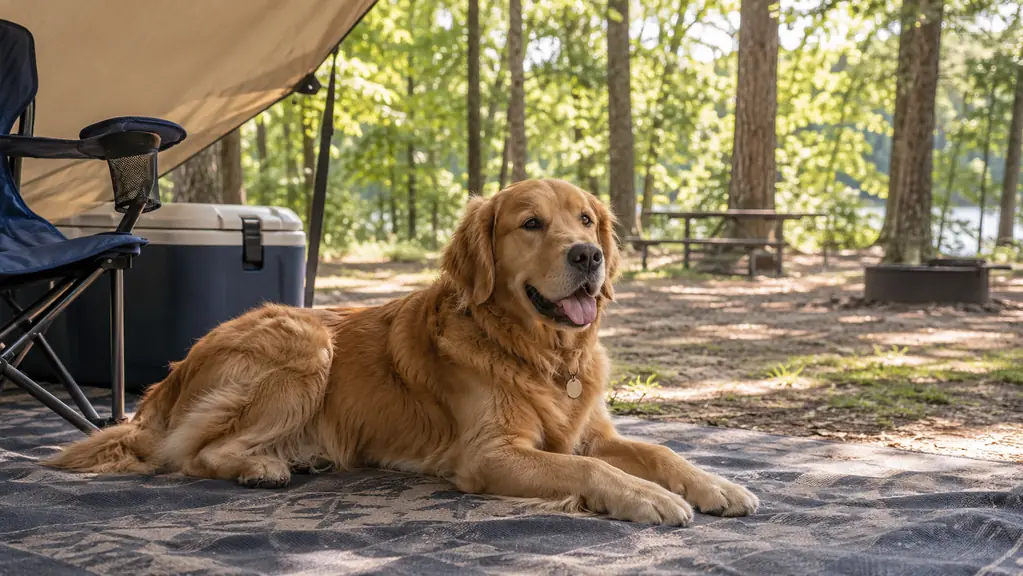
The first time I tied Biscuit to a picnic table leg at a state park outside Chattanooga, she walked three laps around it and stood there wrapped up like a maypole, looking at me like I had done it on purpose. She is a 6-year-old Australian Shepherd mix, about 45 pounds, and she has opinions about being asked to stay put. Before that trip I was using a hardware store chain and a collar clip, and by Saturday morning she had worked out that a slow, steady pull would walk the whole assembly toward the treeline. That is the thing about a dog on a line. They test it once, they remember, and then the rest of your weekend is you getting up every ten minutes to unwrap them.
What I wanted was boring and specific. A line long enough that she could reach the shade and the water bowl, short enough that she could not reach the fire ring or the road, and a stake that would hold in ground that had been rained on the night before. The Supet Dog Tie Out Cable and Stake is what I settled on, mostly because it came as one piece: a 10 foot stainless steel cable with a vinyl coating, a screw stake, and a 360 degree swivel ring at the clip end. The listing rates it for dogs up to 125 pounds, which is more dog than Biscuit will ever be. That was four camping seasons ago. It has ridden in the back of the Forester on every trip since.
The Quick Verdict
A 10 foot coated cable and a screw stake that holds in wet ground and clay. Nothing about it is clever, and that is exactly why it works. Four seasons in, I have stopped thinking about it, which is the best thing I can say about a tie out.
Amazon Check Today's Price →The tie out that ended the every-ten-minutes unwrapping
Vinyl coated stainless cable, a 360 degree swivel at the clip, and a screw stake that bites into wet ground. It lives in the Forester now, and it is not coming out.
Amazon Check Today's Price on Amazon →How I've Used It
We camp two or three nights at a time, most weekends from April through late October, at state parks in Tennessee and national forest campgrounds over in western North Carolina. Ray comes along on maybe a third of those trips. The rest of the time it is me, Biscuit, and a 2017 Subaru Forester with the back seats folded down. Setup is the same every trip. I pick the spot, screw the stake in, clip her on, and then I try to forget about it until it is time for a walk. That is the whole test I put gear through. Does it let me stop paying attention to it.
I put the stake in behind the camper, on the side away from the fire ring, and I check the ground before I do it. Loose gravel and a buried root are the two things that make any stake a problem, and neither one is the fault of the stake. In four seasons the Supet stake has pulled out exactly once, at a site where the pad was maybe six inches of sand over solid rock. That is not a fair test of anything. Everywhere there has been actual soil it has gone in and stayed. On the red clay we get in east Tennessee it goes in slow and comes out with a twist the same way, and I have learned to bring a small trowel to start the hole when the ground has been dry for a week.
The cable is 5mm thick under the vinyl, and it has not kinked, frayed, or developed a stiff spot. The vinyl is chewed through in two places near the clip, from Biscuit doing the thing dogs do when the line goes tight and they are bored. The stainless under those chew marks is intact. The clip still opens and snaps shut with one hand. I check the whole thing at the start of each trip the way I used to check belt tension on a bus, running it through my hands looking for a broken strand, and it has never given me a reason to leave it home.
It is not only a camping item for us. Between trips it lives by the back door, and I use it in the yard when I am working in the garden and want Biscuit outside with me instead of pacing the kitchen. Same stake, same cable, different ground. The park down the road has a handful of picnic tables and no fence at all, and the kit goes in the back for that too. Three uses out of one small bundle of hardware, and it takes up less room in the cargo area than a folding pen would.
Before this I looked hard at the cables that come with a clip on each end and no stake, the ones you are supposed to loop around a tree. I did not want to be the person wrapping a cable around a tree at a state park, and half the sites we stay at do not have a tree in the right place anyway. I also looked at the flat webbing tie outs, which are easier on your hands but get wet and stay wet. The cable and stake kit solved both problems at once, and it meant one purchase instead of two, which is why I stopped looking.
What the 10-Foot Cable Does Around Camp
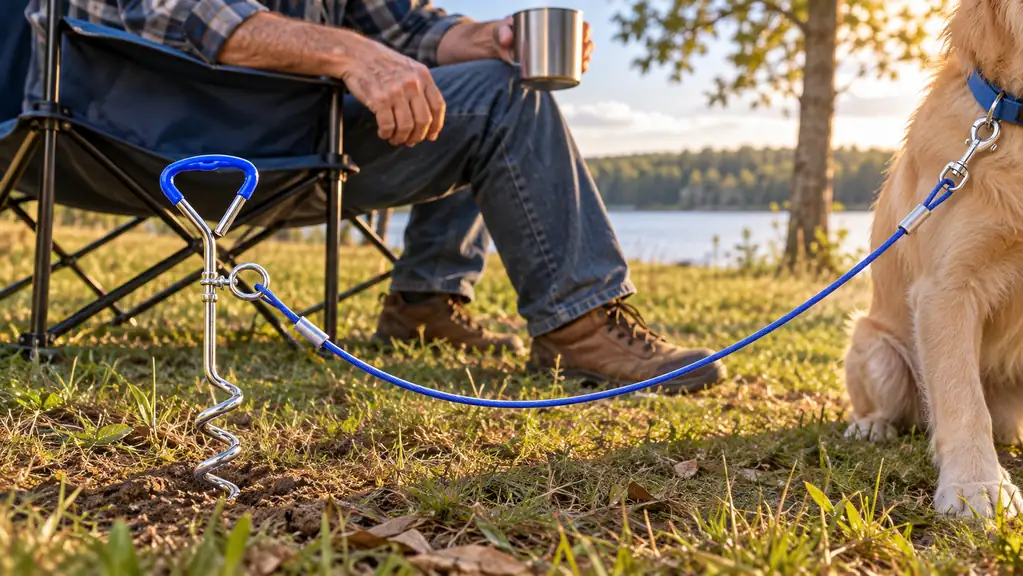
Ten feet sounds short when you read it on a listing. In camp it has turned out to be about right for us. It gets Biscuit from her bed to the water bowl to the shade under the awning without reaching the fire ring. At sites where the road runs close, it keeps her well back from it. When we are in a wide open site with nobody around, I wish it were longer, and when we are wedged between two campers I am glad it is not. If you want more room than ten feet, you will be buying a second cable, because that is the only length in this kit.
The 360 degree swivel ring is the part I did not know I needed. On the chain, Biscuit used to wind herself up and then stand there waiting to be unwound, and I did it four or five times a day without ever thinking of it as a chore. With the swivel at the clip, she turns and the line turns with her. She can circle the stake all afternoon and come out of it with a straight cable. It is a small piece of hardware that removed a job I had been doing for years, and I notice it most on the trips where I forget it is there.
The other thing a coated cable does that a chain does not is stay quiet. A chain rattles against a stake, clinks on a rock, and generally makes a sound that carries in a quiet campground at six in the morning when everyone else is still asleep. The Supet cable is close to silent. When Biscuit shifts at night, I hear her collar tag and the fabric of her bed, not the tie out. At a campground with twenty feet between sites, that matters more than you would think.
Four seasons, one stake, and the only time it pulled out was six inches of sand over solid rock, which is not a fair test of anything.
The Stake Is the Part That Decides Your Night
A tie out is only as good as its stake, and most of the complaints I read before buying were about stakes, not cables. This one is a screw type, which means you lean on it and turn and it works its way down into the ground instead of sitting on top of it waiting for a reason to leave. In soft ground it takes maybe thirty seconds. In hard packed clay it takes longer, and starting the hole with a trowel saves your hands. The top of the stake is wide enough to get a grip on with work gloves, which is more than I can say for the last one I owned.
The stake is also the part with a real limit, and I want to be straight about it. The listing rates this tie out for dogs up to 125 pounds. That number is about the cable and the hardware. It says nothing about your soil, and soil is what decides whether a tie out holds. Biscuit is 45 pounds and mostly interested in lying in the shade, so I am not asking much of it. If you have a dog that hits the end of the line at a dead run every time a squirrel moves, the stake is going to be the thing that fails first, and a heavier anchor is the answer, not a heavier cable.
What I do now is three habits. I screw the stake in at a slight angle away from the direction I expect her to pull. I give it a hard tug with both hands before I clip her on. And I take her off the line when the campground gets busy with kids on bikes, because a tie out is not a fence and it is not a babysitter. Those three habits have done more for me than any piece of hardware, and they cost nothing.
What Four Seasons of Use Have Changed
The vinyl has scuffed and the stake has lost whatever finish it started with. The swivel still turns freely. The clip still snaps. The cable has two chew marks and no broken strands. Nothing about the setup looks new, and I would be suspicious of it if it did, because it has spent somewhere around sixty nights outside in Tennessee and North Carolina weather, plus a few trips where it rained the entire time and I left it out anyway.
One thing I did not expect is that the cable has not stretched. A chain stretches, and a stretched chain starts to sag and drag and catch on everything it passes. This one gives the same arc in the same site that it did the first time I set it up. I have not measured it with a tape, but the arc is measurement enough for me, and it is the same arc.
What has actually changed is how I camp. I used to keep Biscuit on a short lead looped around my chair, which meant she was either on my lap or pulling me out of my lap, and neither one is a good way to cook dinner. Now she has a patch of camp that is hers. She can get up, move into the shade, get a drink, and lie back down without asking me. I can use both hands. That sounds like a small thing if you have not camped with a dog, and it is most of the trip if you have.
I have also stopped shopping. For three years before this I was the person reading tie out listings at ten at night wondering whether a different stake would fix a problem that turned out to be the chain. Once the cable and the swivel solved the wrapping and the stake solved the holding, there was nothing left to research. Gear that ends the search is worth more than gear that wins a comparison.
What I Liked
- Screw stake holds in wet ground and in clay, not just loose dirt
- 360 degree swivel ring means the dog stops winding herself up on the line
- Vinyl coating keeps the cable quiet at night and protects it from teeth
- Comes as one kit, so there is nothing else to buy before a trip
- 10 feet is enough room to reach shade and water without reaching the fire ring
Where It Falls Short
- The stake struggles in sand over rock, which is true of every screw stake
- Vinyl coating is chewed through in two spots after four seasons
- 10 feet is short in a wide open site, and this kit does not offer a longer cable
- No carrying case, and the stake has an edge that will find the inside of a gear bag
What the Supet Tie Out Does Not Do
It does not train a dog. A tie out holds a dog that is already willing to be held. If your dog launches at the end of the line every time something interesting happens, no cable is going to teach it not to, and you will spend the weekend listening to the hardware take the load. That is a training problem, and it gets solved at home, not at the campground.
It also does not replace being out there with her. I still sit where I can see the whole arc of the line. I still check the stake after a hard rain. I still take her off when the site gets crowded. And it is not a substitute for a fence in the yard or a crate in the car. It is one piece of gear that does one job. The reason I keep recommending it to people at the dump station is that it does that job without asking anything of me, and most of the camping gear I own cannot say that.
Who This Is For
This is for the camper with a dog somewhere in the 30 to 70 pound range who wants that dog loose-ish in camp instead of tied to a chair leg. Car campers, weekenders, people who drive to a site with a picnic table and a fire ring and stay two or three nights. It is also for anyone who has been making do with a chain, because the swivel alone is worth the swap. If you have a quiet dog who mostly wants to lie in the shade and watch you fuss with the stove, this is all the tie out you will ever need.
Who Should Skip It
If you have a strong, determined dog that lunges, this is not the answer, and neither is any screw stake. Look at a ground anchor rated for that job, a trolley line between two trees, or a pen. If you camp in deep beach sand, a screw stake will disappoint you no matter who made it, and you want a different style of anchor entirely. And if you want a 20 or 30 foot line for a big open site, buy a cable in that length, because ten feet is what this kit gives you.
Still the tie out in the Forester after four seasons
Ten feet of vinyl coated stainless, a swivel that keeps her from winding up, and a screw stake that holds in wet ground. Worth a look before your next trip.
Amazon Check Today's Price on Amazon →