
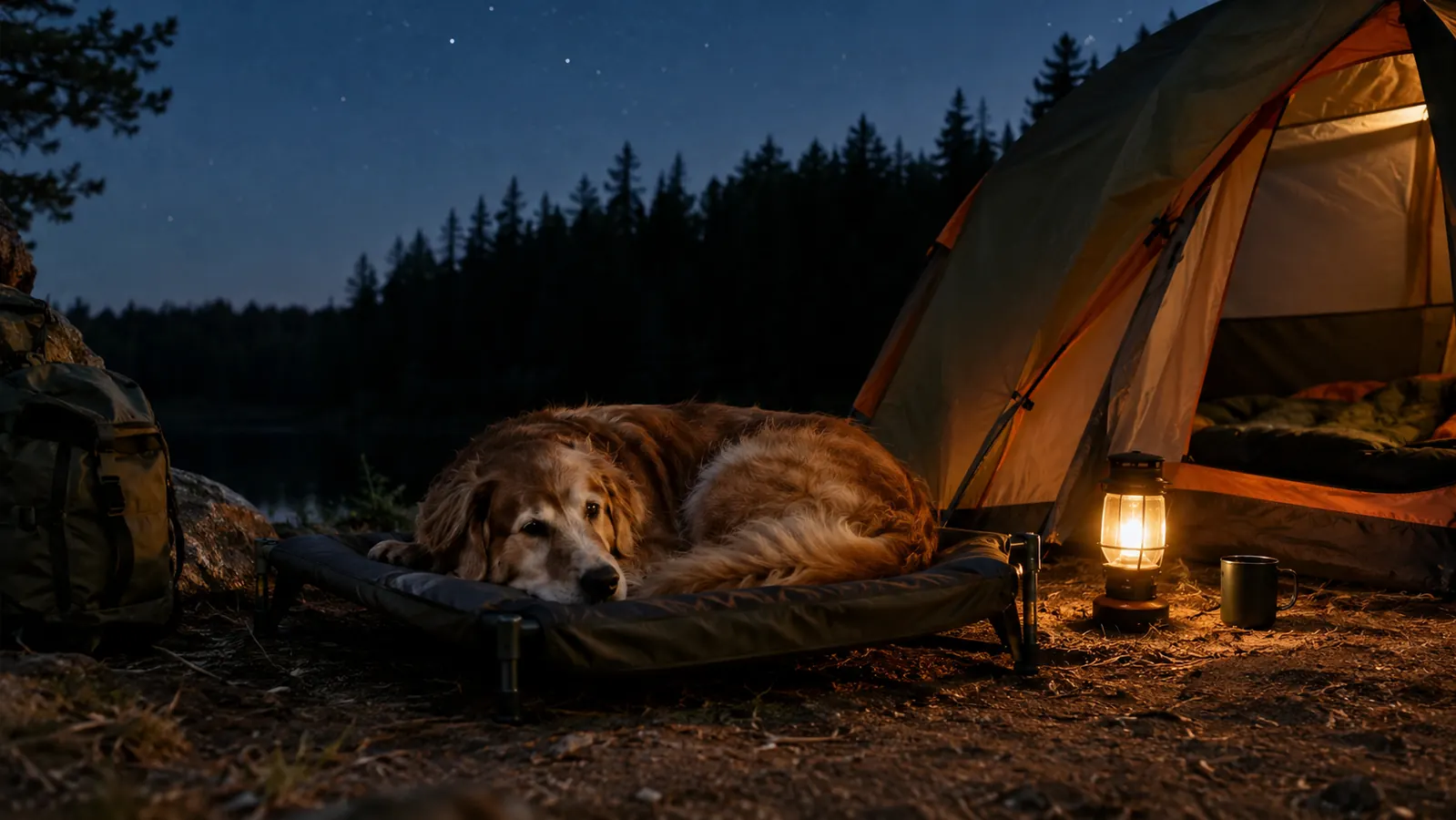
The first time I camped with Tucker in real cold, I made the same mistake most people make. I put him on a blanket on the tent floor and figured that was enough. By two in the morning he was shivering against my leg, and by daylight I had a wet, miserable hound and a blanket that felt like it had been left in a creek. The ground steals heat from a dog far faster than the air does, and damp makes it worse. That night is why I bought the CHEERHUNTING Outdoor Dog Bed, and it is also why I learned the rest of the system around it. A waterproof bed is the foundation. It is not, by itself, the whole answer.
Here is the part nobody tells you about camping with a dog. A dog that runs cold, and Tucker runs cold even in July, needs the warmth problem solved in a different order than you do. You stay warm with a sleeping bag and a pad. He has to stay warm from the ground up, because a hound's belly is close to the dirt and a short coat gives up heat fast once dew or rain soaks through to the skin. This article is the routine I landed on over a couple of years of weekend trips to state parks in the Blue Ridge foothills. It works for a 55 pound hound with a thin coat, and it will work for any short haired dog that sleeps flat instead of curling into a ball.
Start With the Layer That Can't Soak Through
The CHEERHUNTING outdoor dog bed is the base layer I set up first on every trip. It is waterproof, washable, big enough for Tucker to stretch out flat, and it packs flat in the truck. Everything else in this routine can be swapped for what you already own. This is the one piece worth buying once.
Amazon Check Today's Price on Amazon →Step 1: Put the Waterproof Bed Between the Dog and the Ground
There is no step more important than this one, so I am going to be blunt about why. The ground is a heat sink. On a clear night in October at Devils Fork State Park, the air around the tent read 38 degrees and the ground under the tree line was colder still. That temperature difference is what pulls warmth out of a dog all night long. A blanket on the tent floor does almost nothing about it, because a blanket loses its loft the second 55 pounds of dog presses it flat. It stops being insulation and starts being a wick. Every bit of damp in the ground, every drop of overnight dew, works its way up through the fabric and into his belly.
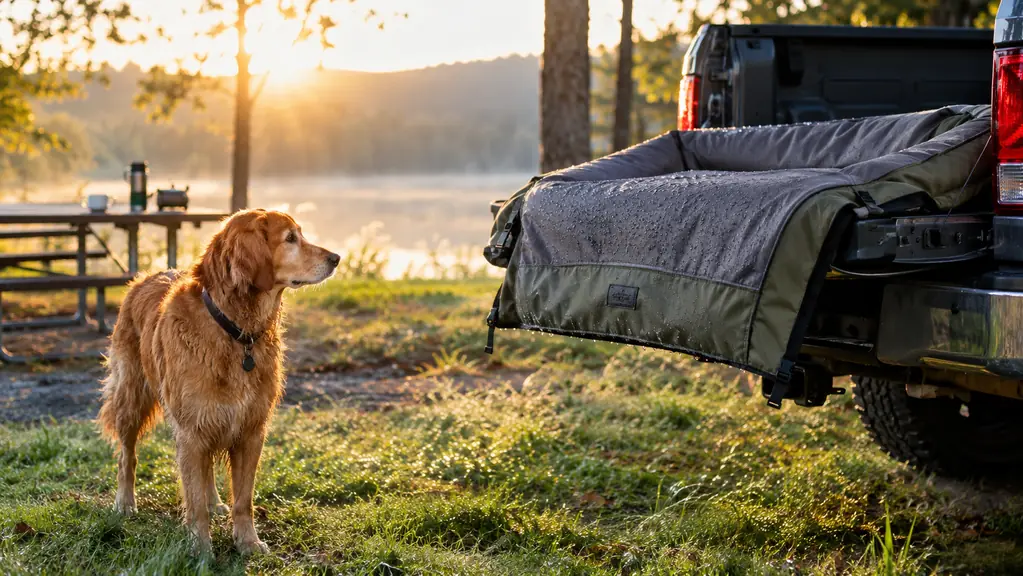
A waterproof bed changes what happens on the ground entirely. The CHEERHUNTING mat keeps the damp from ever reaching the dog, and it stays dry on top even when the grass beneath it is sopping. I have used it on wet gravel under a picnic table, on grass heavy with dew, and on the floor of my truck's bed after a steady overnight rain. In every case the upper surface was dry in the morning. That single fact matters more than any other piece of gear in this article. A dry dog is a warm dog. A damp one spends the whole night burning calories just to hold still.
One practical note before we move on. The large size sits flat and does not bunch up underneath him, which is the failure mode of every thinner mat I tried before it. And because the surface wipes clean, I can rinse it at the campground wash station instead of hauling a mud-caked blanket home in the truck. That sounds like a convenience. It is also part of warmth, because the bed goes down clean and dry every single night, and a clean dry start is half the battle.
Step 2: Set the Bed Up Out of the Wind and Off the Coldest Ground
The bed is the foundation, but where you lay it decides how hard the foundation has to work. Wind is the second thief. A short coated hound gives up heat fast in a breeze, so I pick the protected side of the tent, the truck, or a tree line. At Jones Gap State Park last fall I set Tucker's bed on open ground beside the fire ring and paid for it all night. The fire felt fine while we sat by it. Once the flames died, the breeze off the ridge cut straight across his bed, and he spent the hours after midnight pressed against the tent wall looking for the lee side.
Now the drill is specific. The bed goes against something solid, never in the middle of open ground. A tent wall, the side of the truck, a fallen log, anything that breaks the breeze at dog level. Then I look at the dirt before I lay the bed down. Low spots collect cold air the way they collect water, and grass that is still wet at nine at night will still be wet at six in the morning. If the only flat ground in camp is a dip, I take the extra ten minutes to move the tent or park the truck so the bed sits on the rise instead.
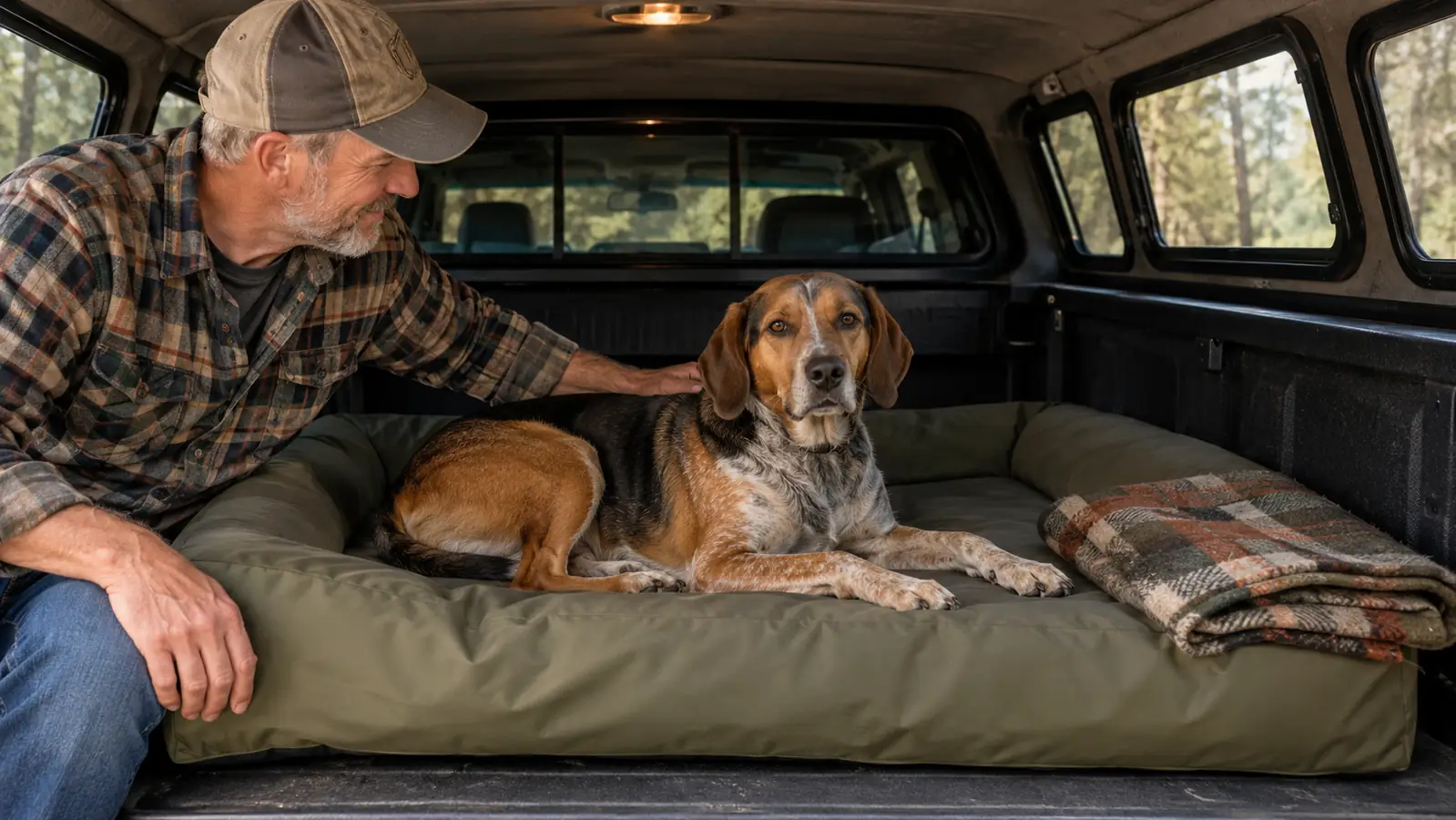
Bear this one in mind too. When I sleep in the truck bed instead of the tent, Tucker's bed goes against the cab wall, out of the draft that sneaks in around the tailgate. The topper keeps the rain off, but it does not stop a breeze. I block the gap with a duffel bag against the tailgate, and his bed sits against the cab side of the box. It is not fancy. It works, and it keeps him from curling up against my legs all night trying to share my sleeping bag.
Step 3: Add a Warm Layer Under the Dog on Top of the Waterproof Bed
This is the step most people skip, and it is the difference between a dog that sleeps and a dog that shudders. A waterproof bed stops damp, but a cold dry surface still pulls heat out of a 55 pound belly all night long. The fix is cheap. Fold a wool or fleece blanket once and lay it on top of the mat, under the dog. Wool keeps working even when it is damp, which is why I reach for it first. Fleece dries fast and washes easily. Either one traps a pocket of warm air between the dog and the waterproof surface he would otherwise be sleeping flat on.
What I actually do is keep one dedicated camp blanket that never leaves the truck. It gets folded on top of the CHEERHUNTING bed an hour before lights out, so Tucker's own weight settles the two layers together before he lies down. He gets settled, I get settled, and then I do one extra pass. I reach over, give the blanket a shake to fluff the trapped air back up, and tuck the edges under the mat. That routine sounds fussy written down. It takes twenty seconds with a headlamp and it stops the most common cold night failure I know: a setup that is dry but still cold because the insulating layer has gone flat.
For a really cold night, the high 20s or below, I add a second folded blanket under the top one. And I do not borrow from my own kit to pad his. He has his own layers, and my sleeping pad stays where it belongs. The point of the whole system is to be simple enough to set up in the dark, because I have arrived at more than one state park after sunset and built camp by headlamp. When that happens, the routine has to run on muscle memory.
Step 4: Give the Dog a Way to Hold His Own Body Heat
A dog is his own furnace. The job of the setup is to stop that heat from escaping. The simplest version is a top cover. Tucker will not stay under a blanket on his own, so on the coldest trips he wears a dog coat to bed and the blanket goes loosely over him once he is settled. I also learned to let him choose his position. A dog that curls with his nose tucked under his tail is saving heat on purpose, and I have stopped trying to straighten him out. I drape the cover over the curl instead of forcing him into a burrito.
Food and water are part of the same system. A dog that goes to bed on a full stomach burns fuel all night, and that fuel comes out as body heat. I feed Tucker his usual evening meal about an hour before bed, same as at home, so the work of digestion is underway before the night cools off. The water bowl gets fresh water that is not straight from the creek, because ice cold water pulls core temperature down in a small way that adds up over eight hours.
One thing that earned its place in the kit is a hot water bottle. A one liter bottle, filled with hot water from the camp stove or the truck thermos, wrapped in a towel so it cannot burn, laid against his side under the loose blanket. He leans into it like a wood stove. I learned this from a fellow camper at Caesars Head State Park, and it has saved more cold nights than any other piece of this routine. It also warms the spot on the bed where he lies, so the surface he touches is not cold for the first hour.
Step 5: Do a Bedtime Check and a Middle-of-the-Night Check
This is the part that separates a good setup from a lucky one. Before I climb into the sleeping bag, I check his ears and his front paws. Ears that stay cold after a minute in my hands, or paw pads that feel like ice, tell me the bed is losing heat somewhere. Then I set myself to wake once in the small hours. If he is shivering, I do not wait until morning to fix it. I change the setup under him, add the blanket, or move the bed out of a draft that showed up when the wind shifted after midnight.
I did not always do this, and I have the shivering nights to prove it. The first time Tucker shook through a cold night I told myself it was just a snap and he would settle. He did not settle. He was miserable and I was miserable, and the next morning neither of us wanted to be in camp. Now the routine is simple. I sleep with one ear open, and if I hear the blanket rustle in the small hours, I get up, check the bedding, fluff the wool layer, and do not go back to sleep until he is quiet again. It costs me ten minutes. It has saved dozens of mornings with a dog that is still ready to hike.
And I keep an off ramp ready. If the middle of the night check finds him genuinely cold, wet, or unhappy, we change plans. He comes into the truck with me, or onto the end of my sleeping bag in the tent, and the gear problem gets solved in the morning. There is no prize for finishing a weekend with a dog that did not complain. The prize is a dog that wants to ride along next weekend instead of hiding under the truck when he sees the cooler come out.
What Else Helps
Beyond the bed and the basic layering, a few extras have earned permanent space in the truck. The first is a closed cell foam pad that slides under the CHEERHUNTING bed on the coldest nights. It adds a layer of still air between the ground and the waterproof mat, it costs very little, and it weighs nothing. I tuck the edges so Tucker does not trip over them, and it works quietly underneath everything else. For a dog that runs cold, an inch of foam is worth more than any fleece on top.
The second habit is feeding for the night. In camping season I add a modest extra scoop to Tucker's evening meal, and I feed it an hour before bed rather than late. The point is not to fatten him up. A dog burns a surprising number of calories just holding its temperature through a 40 degree night, and a little fuel in the tank shows up as warmth by two in the morning. This is the same log-on-the-fire principle that makes a camper eat a bigger dinner before a cold night, and it costs nothing.
Third, ease into the season. The first camping weekend of the fall is not the time to test the whole system at 28 degrees. Take him on a mild trip first, run the full setup at 45 degrees, learn where the drafts are, and fix them before the hard nights arrive. I did my shakedown weekend at Table Rock State Park on a mild October weekend, and the mistakes I made there are exactly the ones I have not made since. The bed never changed. My placement, my blanket choice, and my middle of the night timing all got better because I practiced when the weather was forgiving.
I spent one 38 degree night learning that a blanket on the tent floor is not insulation. A waterproof bed is where the warmth starts.
Set the Whole System Up Tonight
The CHEERHUNTING waterproof bed is the layer everything else sits on. It is waterproof, washable, big enough for a 55 pound hound to stretch out, and it packs flat in the truck. Add your wool blanket and a warm dinner and you are most of the way to a quiet night.
Amazon Check Today's Price on Amazon →