
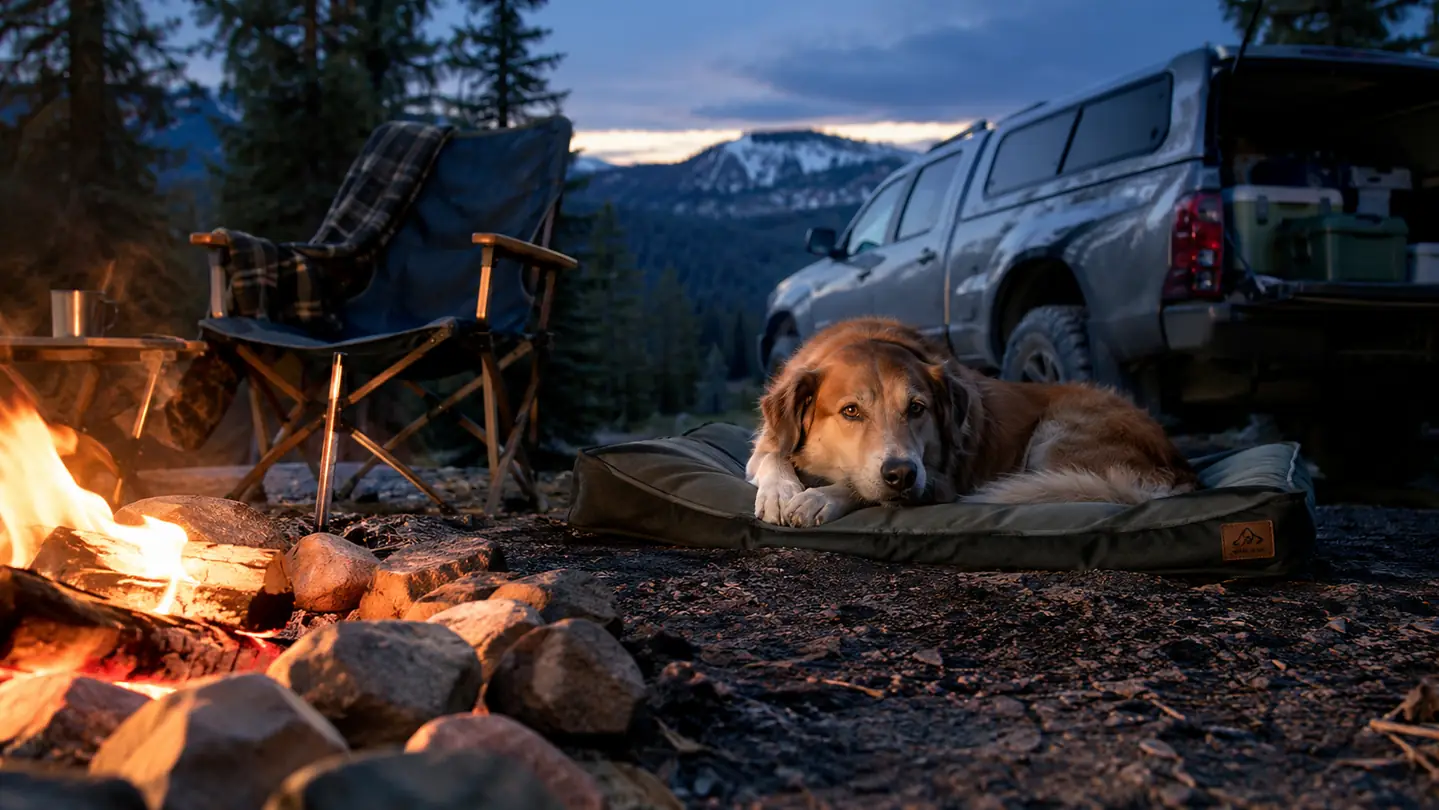
When Tucker and I rolled into Devils Fork State Park last March, the ground was still cold enough to hold frost into midmorning. The forecast called for a clear night and a morning in the upper thirties, but by the time I got the tent up, the wind had picked up and the temperature was dropping faster than the NOAA app predicted. I had two dog sleeping options in the back of my pickup: a CHEERHUNTING Outdoor Dog Bed I'd ordered after a buddy at the campground swore by it, and a dog sleeping bag a neighbor had loaned me, telling me it was the only way to keep a hound warm on a cold mountain night. Tucker is six years old, about 55 pounds, and he runs cold at night. He also has a nose that can find a deer trail from two hundred yards away, so he sleeps tied to a lead staked near the tent door. That first night, I put the sleeping bag inside the tent, flat on the floor, and set the CHEERHUNTING bed just outside the door, under the vestibule. I wanted to see which one would stay dry and which one he'd actually use when the temperature dropped below freezing. That experiment settled the question for me, and it might settle it for you too, if you're trying to decide what to pack for your own camping dog.
The answer, after three nights and two rain showers, is that the CHEERHUNTING bed is the better all-around choice for most campers. The sleeping bag wins on warmth and packed size, and I will get to those in a minute. But for the way I camp with Tucker, which is car camping, tailgating, and the occasional night in the truck bed, the bed does everything the sleeping bag does and then some. It stays dry, it cleans with a hose, and it works for more than just bedtime. If you are reading this because you are standing in a store aisle with the bed in one hand and a sleeping bag in the other, here is how I would break it down.
| CHEERHUNTING Outdoor Dog Bed | Dog Sleeping Bag | |
|---|---|---|
| Warmth | Flat surface, no side walls, cold drafts hit the dog's back | Insulated cocoon wraps the dog, traps heat, blocks drafts |
| Wet ground | Sealed underside keeps moisture out; water beads up | Fabric base soaks up dampness from tent floor |
| Mud & cleanup | Hose off, dry in a few hours in the sun | Soaks up mud, needs washing or a long dry |
| Packed size | Rolls into a bundle about the size of a camping pad | Compresses into a stuff sack about a loaf of bread |
| Comfort on hard ground | Quilted layer gives cushion on rocky tent floor | Thin fill flattens under a 55-pound dog |
| Multi-use | Tent, truck bed, tailgate, picnic table, porch | Designed for sleeping; awkward anywhere else |
| Ease of staking | Firm enough to stay put on a tent floor | Light and slides around when the dog shifts |
| Breathability | Breathable top keeps dog from feeling clammy | Traps condensation inside after a humid night |
Where the CHEERHUNTING Bed Wins
I will start with the thing that surprised me most, because I expected the bed to be a simple flat mat and instead found a piece of gear that could take a beating. The first morning at Devils Fork, Tucker found a mudhole along the trail to the bathhouse and came back looking like he had been dipped in cocoa. I carried him to the spigot, hosed him off first, then hosed the bed down. The water and mud rolled off the surface in sheets. There was no soaking, no absorption, just clean water and a damp surface. After about ten minutes of spraying and a few shakes, the bed was clean enough to bring back to the tent. I hung it over a picnic bench in the sun, and by three that afternoon it was dry. The sleeping bag, by contrast, had soaked up the overnight drizzle like a sponge. I hung it on a clothesline all day and it was still damp enough to feel clammy at supper. For a three-day stay, that meant the sleeping bag was out of commission for a full day while the bed kept working. That is the kind of practical difference you only notice when you're living out of a cooler and a truck bed. On the third morning, frost covered the picnic table and the ground was still wet. I simply wiped the bed off with the corner of a t-shirt and laid it in the sun for an hour while I made coffee. The sleeping bag would have needed another day inside a warm car to fully dry. Over the course of that trip, I must have cleaned and dried that bed four times, and each time it came back looking like new. That durability is what sold me. A dog bed you can hose off and hang dry is worth its weight in a campground that had surprise rain twice in one trip. I have used that bed every weekend since, including a truck-bed night in January that dropped to 19 degrees. It has not ripped, faded, or lost its shape. The same cannot be said for the sleeping bag, which pulled a seam after the second wash.
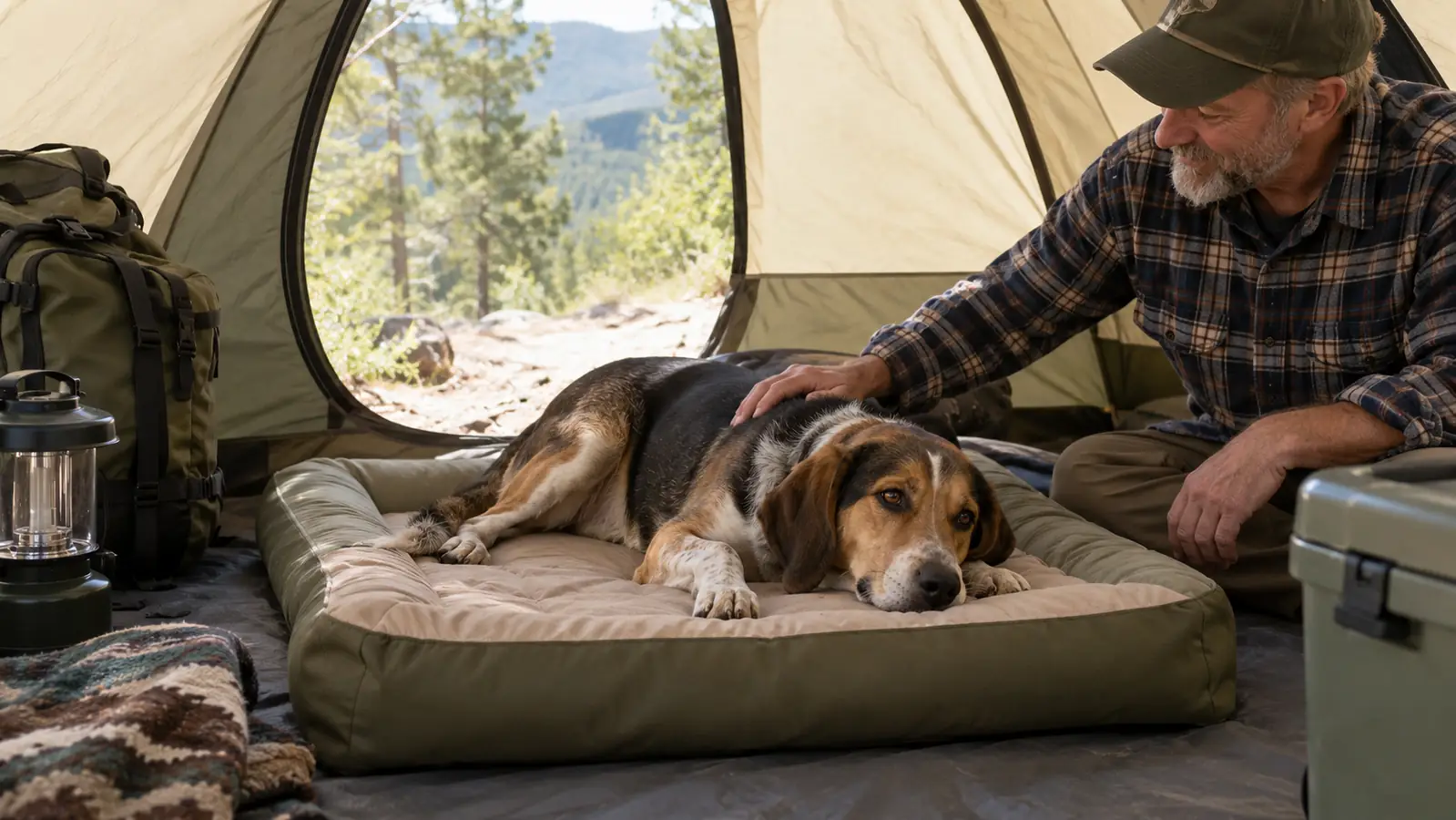
The bed also earns its keep beyond the tent floor. I used it as a pad for Tucker to sit on while I cooked breakfast at the picnic table, so he didn't have to sit on damp wood. I put it down in the truck bed when I slept in the topper during a cold snap. I even strapped it to the tailgate as a place for him to lie while I cleaned dishes. A sleeping bag is a sleeping bag. You can't spread it on a picnic bench and expect it to keep its shape. The bed is more like a piece of camp furniture you can move around. It weighs about as much as a medium camping pad, rolls up into a bundle you can lash to the side of a pack, and if it gets muddy you don't have to treat it like a treasured garment. Just hold it over a puddle, scrub with a brush, and rinse. It dries in a couple of hours in the sun and by evening it's ready to go again. That kind of low maintenance is exactly what you want in gear that lives in a truck. Tucker also seems to sleep more soundly on the bed. He stretches out full length, which he can't do in a sleeping bag. On the bed, his spine is supported by a flat, cushioned surface. The sleeping bag forces him into a curled position, and even though he stays warm, he wakes up grumpy. I can't measure that, but I can see it in his face every morning. When a dog is comfortable, he doesn't toss and turn. Tucker sleeps through most nights on the bed. In the sleeping bag, he woke up twice and wanted out. That is a huge difference from my side of the tent.
Where the Dog Sleeping Bag Wins
Here is where the sleeping bag earned my respect. On the third night, the temperature dropped to 28 degrees. Tucker would not settle on the bed. He kept standing up, circling, and then trying to climb into my sleeping bag, which is not something you want a 55-pound dog doing at 2 AM. Finally, I pulled out the dog sleeping bag, unzipped it, and tucked him inside. He stayed put for six hours straight. That is a record for Tucker. He is a restless dog, and the only time he has ever stayed still that long is in the winter under a blanket. The sleeping bag wraps him up, traps his body heat, and keeps cold drafts off his back. A flat mat can't do that. If you camp in temperatures below freezing, and your dog is short-haired or gets cold easily, the sleeping bag is the warmer option. There is no argument about that. I also noticed that the bag helped with wind. Our site was exposed on the north side, and the 2 AM wind chill had to be in the teens. Under that bag, Tucker's ears were warm and his belly was warm. He did not try to burrow under my gear once. The bed, on that same night, kept his underside off the cold ground, but it did nothing for the wind that cut across the opening of the tent. The bag created a microclimate. If you are camping in a place where wind is common, that draft protection is worth a lot. The bag also kept him off the damp floor of the tent when the ground sheet got wet. That is something no flat mat can do. It is a real advantage.
The sleeping bag also packs down in a way the bed cannot match. When I rolled and compressed it, it fit into a stuff sack about the size of a big loaf of bread. I could slide that into the side pocket of my duffel bag. The CHEERHUNTING bed rolls into a bundle roughly the size of a rolled-up cotton sleeping pad, which is maybe twice the volume. It is not heavy enough to be a burden in a full-size pickup, but it would be a problem if you were backpacking or trying to fit everything into a small car trunk. The bag is also a little lighter, because it has less material and no sealed bottom. For the ultralight-minded, the sleeping bag is the more packable piece. But that advantage fades the moment you actually unpack. A sleeping bag takes up room no matter what; it's a long narrow cylinder. The bed can be laid flat and used as a ground cloth, a picnic blanket, or a mat for your dog to lie on while you change a tire. That is a trade-off I am willing to make because I always have the truck. If I were hiking a trail and had to carry everything on my back, I would seriously consider the sleeping bag. As it is, I have packed the sleeping bag in exactly those winter trips, and I know it earns its space. Once, I tried to fold the bed into the same stuff sack as the bag. It did not fit. That is a concrete difference you will feel when packing.
For most campers, the CHEERHUNTING bed is the right call.
It dries fast, cleans up in minutes, and works for more than just sleeping. I've used it in tents, truck beds, and on picnic tables. If that sounds like your kind of camping, see today's price on Amazon.
Amazon Check today's price on Amazon →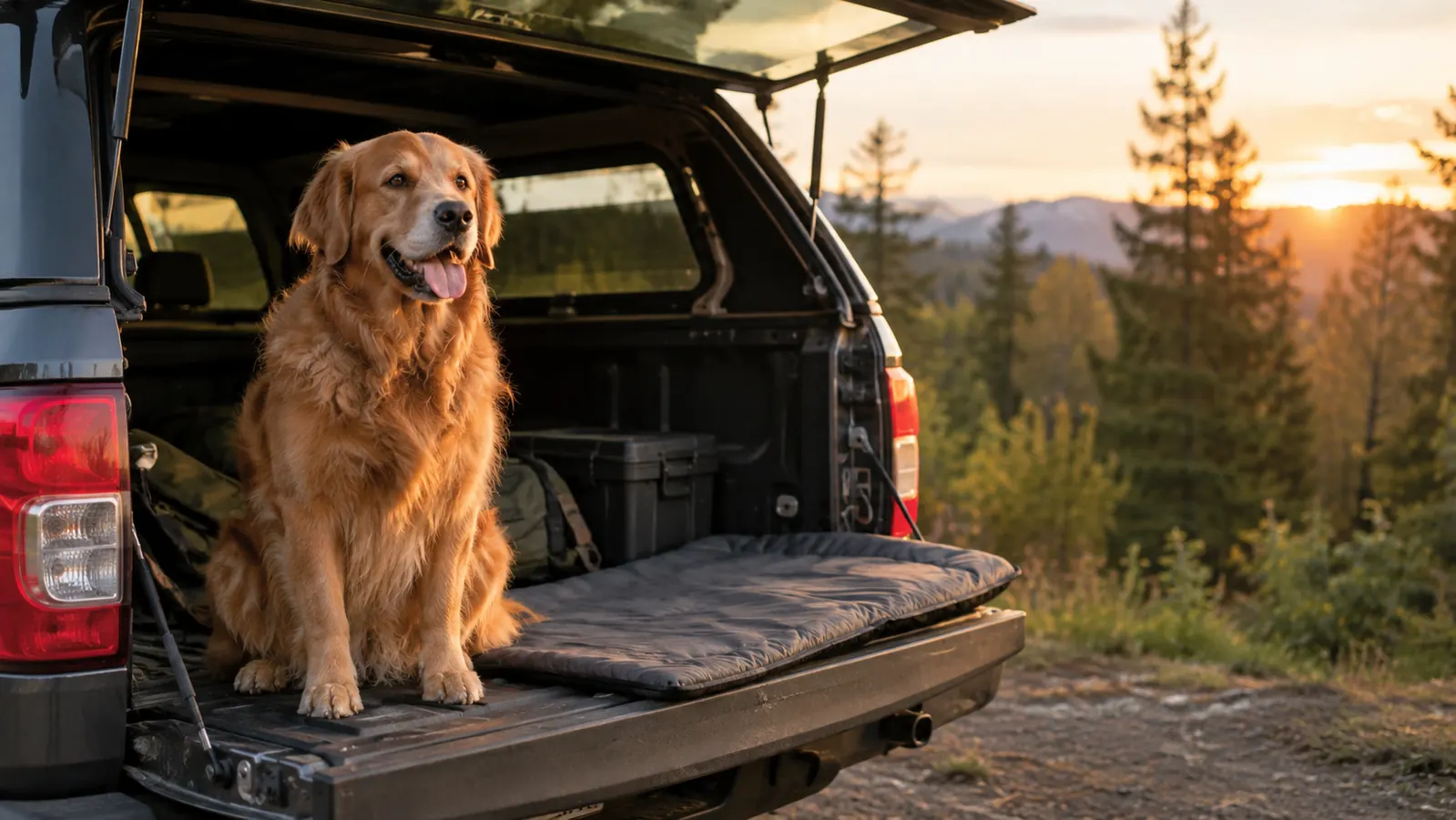
Who Should Buy Which
Let me put it this way. If your camping trips happen between mid-March and mid-November, and you're camping in a spot where the dog can be tied out, I would put the CHEERHUNTING bed at the top of my list. It is the piece I reach for more than any other piece of dog gear I own. It handles mud, rain, frost, truck beds, and picnic tables without a second thought. The sleeping bag is the tool I pack for specific winter nights, like the one at Devils Fork, or for a dog that gets cold fast and has trouble staying still. If you live somewhere that dips below freezing more than a couple of nights a year, or if you plan to do any shoulder-season hiking, the sleeping bag deserves a spot in your kit. They are not mutually exclusive. I now own both. But if you have to choose one, consider what your camping season actually looks like. For me, that answer is clear. The bed gets used on every trip. The sleeping bag sits in the topper until the mercury really drops. That division tells you which one matters more on a normal weekend. If you camp once a year in July, the sleeping bag might be overkill. If you camp all four seasons, you will want both.
Ready to pick one for your next trip?
If you're leaning toward the bed, the CHEERHUNTING Outdoor Dog Bed is the one I still use. It's been through two wet springs and a truck-bed winter and it's still going. Check today's price on Amazon to see if it fits your pack.
Amazon See today's price on Amazon →