
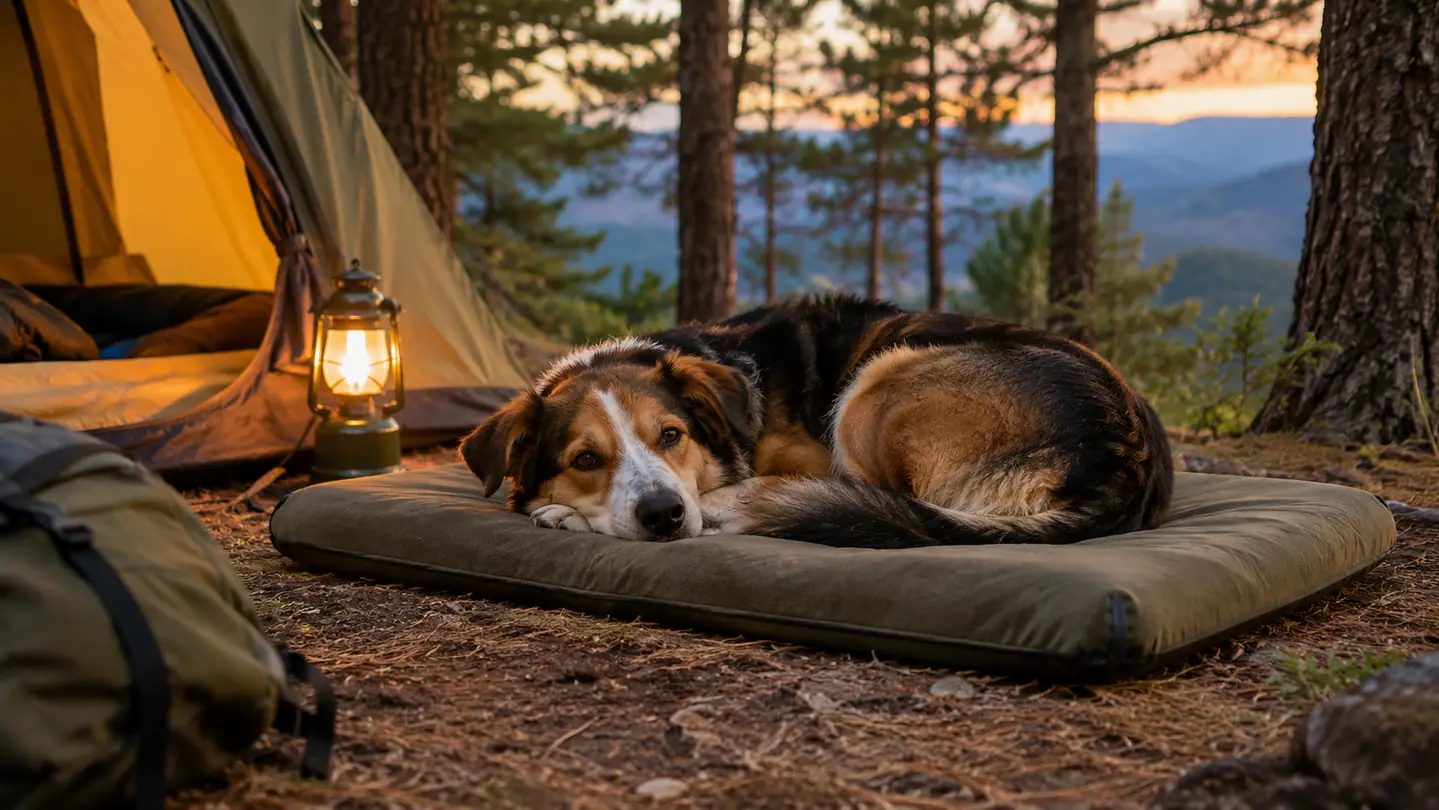
The first night Tucker slept on the bare tent floor, he spent most of it curled into the smallest ball a 55-pound hound can manage. That was the trip that convinced me camping with a dog needed a plan, not a wish. By the next spring I had tried a folded moving blanket, a foam mat from the garage, and an old sleeping bag I did not care about anymore. All three slid around, soaked up ground damp, and ended up bunched in a corner by morning. The CHEERHUNTING outdoor dog bed was my next attempt at a real answer. A year later, it is still the first thing that comes out of the truck.
I am Rick Dawson, 58, retired from turning wrenches, and I live in the upstate of South Carolina near the Blue Ridge foothills. I camp most months of the year at state parks and national forest campgrounds within a day's drive. Tucker is my six-year-old hound mix. He runs cold at night, and he will follow a scent off the site if he is not tied out. So the bed had a specific job: keep him warm, keep him off the damp, and give him a spot he would stay on. Everything in this review comes from using it, not from the box.
The Quick Verdict
A tough, washable bed that shrugs off dew, dirt, and pine needles and keeps a cold-running hound off the ground. Not the cushiest bed ever made, but it has earned its spot in the truck through a full year of camping.
Amazon Check Today's Price →The bed that has slept a full camping season with Tucker
If you are tired of the dog ending up on your sleeping bag by midnight, this is the one I would start with. It survived a year of weekend trips, one wet week in the mountains, and a hound who digs before he settles.
Amazon Check Today's Price on Amazon →How I've Used It
For the past year, this bed has gone on every trip with us. That is roughly twenty-five camping nights at places like Devils Fork State Park, Jones Gap, and a few national forest spots in North Carolina. In the tent, it sits on the ground pad next to my bag, with the closed-cell foam mat under it on mornings when the ground is wet. During the day it moves outside by the picnic table or the fire ring so Tucker has a place he is allowed to lie that is not in the dirt. He is tied out on a long line, and the bed is his spot.
It has been rained on, walked through, covered in burrs, and dragged two campsites over by a hound who remembered a hot dog wrapper from breakfast. It has been hosed off at a spigot, washed in a coin laundry near Table Rock when the burrs got serious, and hung over a picnic table to dry. One night in October, Tucker got sick on it after drinking from a creek he should have left alone. I rinsed it, washed it, and it came back the same. That is not a feature on the box. It is just what a year of real use looks like.
The bed has also slept in the truck bed with me. When I close the topper and bunk down in the back, the bed goes on the floor between the wheel wells, and Tucker curls up on it with his head toward the tailgate. In that setup the low profile is a real advantage. It leaves room for my bag and the gear, and it keeps him off the cold metal. Cold metal draws the heat out of a dog fast, and this mat stops that completely.
The other thing it does is set a routine. Unload the truck, set up the tent, lay the bed, stake the line. Tucker does his slow circle and drops onto the mat like he has done it a hundred times. A dog that runs cold needs a place he can commit to before dark. Once he claims that mat, he stops pacing the campsite, and I stop guessing where he will end up.
What the CHEERHUNTING Bed Actually Does
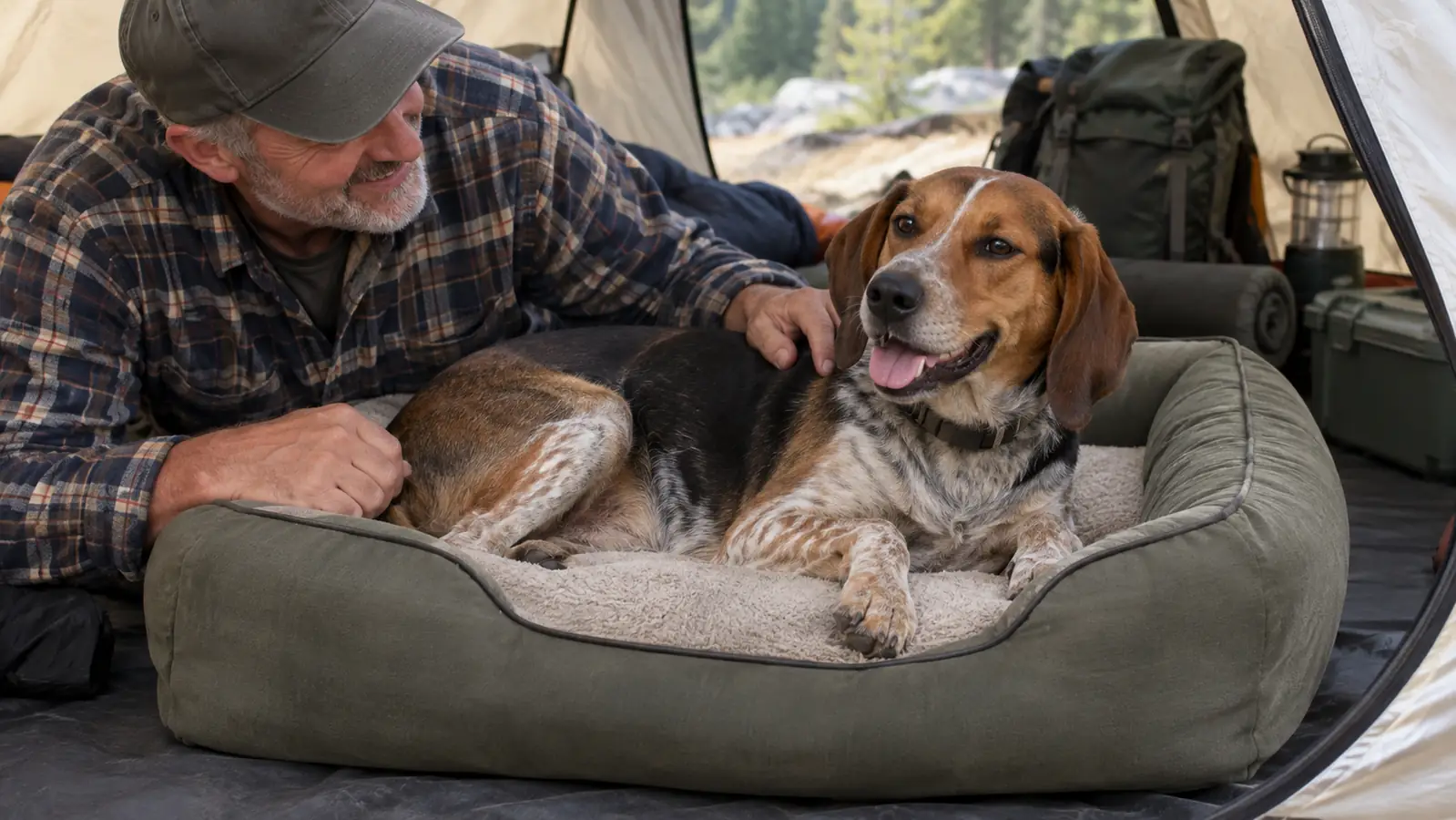
Read the listing and you will see waterproof, washable, large, durable, water-resistant, portable. Those are all true, but they are also just words. What matters is how they behave at 2 a.m. when the dew settles and the ground is cold. The bottom is a waterproof layer, so damp cannot work up through it. The top sheds water and dew instead of soaking it in. The fill is firm and low-profile, more like a camp pad than a living-room cushion. That firmness is what keeps Tucker on top of the cold instead of sinking into it.
At the large size, Tucker has room to stretch out on his side, legs pointed at the tent door, without hanging off. It rolls up tight enough to ride behind the seat of my pickup, and it is light enough to carry under one arm while you handle the firewood. It does not take up the space a crate or a thick foam pad takes. For a truck bed, a tent, or the back of an SUV, that is the whole point of a travel bed.
I will also say the details are sorted. The edges are clean, and the surface is easy to wipe down when a paw track shows up. It does not slide around the tent the way the folded blanket did, because the weight of a dog on a broad mat holds it in place. The little things are what make a piece of gear get used instead of left in the truck.
A Year of Camping Nights
The cold test came in late October at Devils Fork State Park. The forecast said 41 degrees overnight, and the tent does not add much to that. Tucker slept through the night on his bed, ears up, nose on his paws, and did not try to wedge himself against my legs like he used to. That is the moment I stopped wondering whether the bed was worth the space in the truck.
The wet test came a month later on a rainy weekend in the national forest. Groundsheet under the tent, and still the inside floor held a chill and a little damp where the seams sat. The bed bottom stayed dry all night. In the morning the top surface had beaded up the condensation, and a shake of the mat cleared it. On a soaked morning I have hung it over the truck tailgate, and it was dry by the time the coffee was done.
The durability test was not weather. It was a hound. The first week Tucker dug at the center of the bed the way he digs at every new bed, two minutes of pawing to find the weak spot. There is no weak spot. After a year there are no loose threads on the edges, no torn corners from the tie-out line crossing it, and no flattened patch where his hip lands. For a piece of camping gear that lives in the dirt, that is the honest test.
Spring trips are the other extreme. Cold nights turn into wet, buggy evenings, and the bed sits out on the grass by the fire ring while Tucker supervises the cooking. Rain showers come through without a lot of warning in the foothills. Twice this year I was slow getting the gear under the tarp, and the bed took the rain head-on. The top beaded up, the underside stayed dry, and Tucker was back on it as soon as the shower passed.
Fall trips add their own test. The campground fills with leaves, and a low mat becomes a magnet for them. I have swept this bed off more times than I can count. The surface is smooth enough that the leaves and needles do not cling the way they do to fleece or canvas, so one pass of the hand clears it. It is a small thing, but at the end of a long day it is the small things that keep you from swearing at a piece of gear.
Where It Comes Up Short
I will not pretend this is a cloud. The padding is firm and low-profile, and a dog who sleeps on a thick orthopedic bed at home will feel the difference on the first night. It keeps the cold and damp off, but it does not add much warmth on its own. On nights below freezing, Tucker still wanted his blanket over him, and I would not take this bed into single digits without a pad under it and something over him.
It is also a mat, not a crate. It will not hold a dog who wants to wander. Tucker is on a tie-out line at the campsite for that reason, and the bed being his spot is what keeps him near it. If your dog is a runner, buy the line, not the bed. And if the bed gets truly soaked, the fill holds water and needs sun or a clothesline to dry fully. A fast shake clears dew, but a full dunk means planning ahead.
For what two nights of campsite fees cost, you could grab one of the cheaper foam mats, but they soak up water and flatten within a season. The insulated outdoor beds with raised sides are warmer and more comfortable, but they take up half the truck bed and they are a pain to dry. I considered both before settling here. If your trips are always car camping with room to spare, the bigger insulated bed wins on comfort. If you pack light and want one bed that does the job, this is the honest middle.
Keeping It Clean on the Road
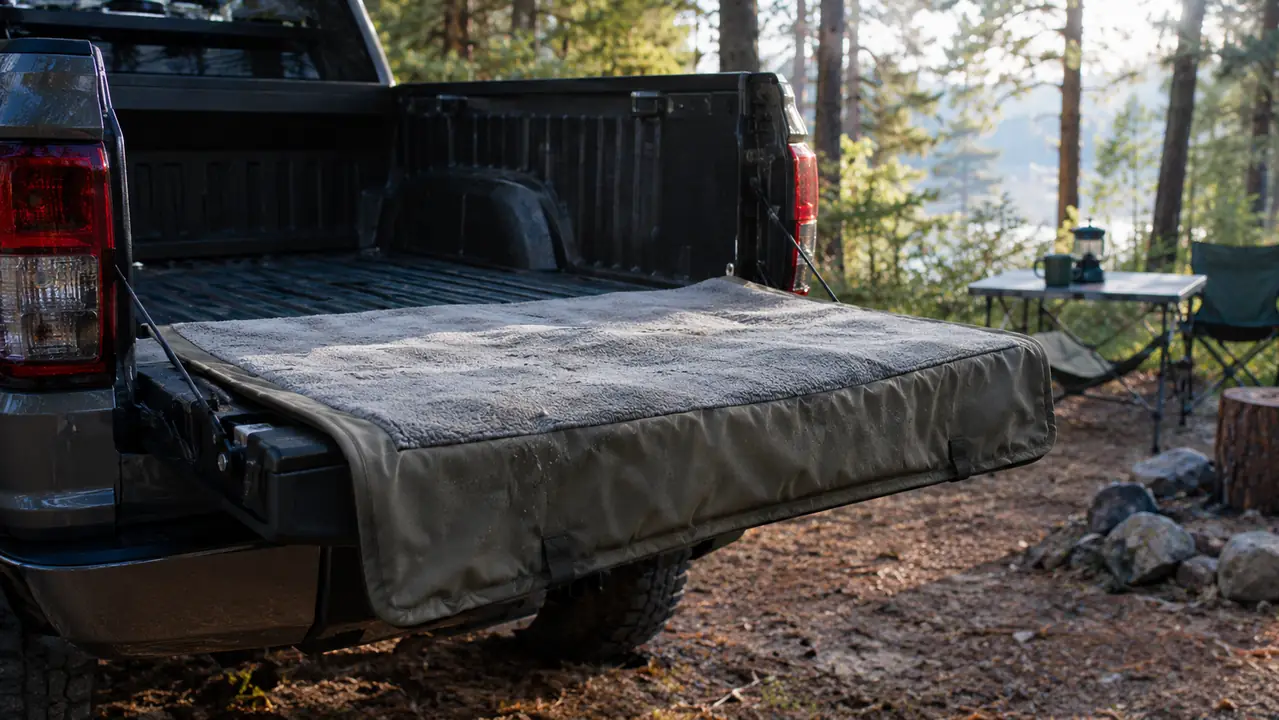
This is the part nobody tells you about dog camping gear: it gets filthy, and the filth is specific. Pine pitch, burrs, mud, and the occasional evidence that a dog ate something he should not have. What makes this bed workable is that it goes in a washing machine. I have washed it at home and in a coin laundry in town, cold water, no fabric softener, and hung it over the tailgate or a picnic table. It dries in an afternoon in the sun. I would not want a bed I had to hand-scrub, and I would not want one that could not take a machine cycle.
The waterproof bottom matters for cleaning too. A bed with a cloth underside soaks up whatever the tent floor has absorbed over a wet weekend. This one wipes off the underside with a rag, and the top surface takes most stains off the same way. Between washes, a shake and a few minutes in the sun handles the normal campground grime. That is the difference between a piece of gear you use and one you lug around.
What I Liked
- Waterproof bottom shrugs off damp tent floors and wet ground
- Washes clean in a machine and dries fast in the sun
- Large enough for a 55-pound dog to stretch out fully
- Light and portable; rolls up small for the truck or a pack
- Top surface sheds dew and spills instead of soaking them in
- No tears, loose threads, or flattened spots after a full year
Where It Falls Short
- Firm, low-profile padding, not plush
- Adds little insulation on its own below freezing
- Will not contain a wanderer; you still need a tie-out
- Needs sun or a line to fully dry after a real soaking
A year of campgrounds, one cold-running hound, and a bed that still looks like it did in May. That is the whole review.
Who This Is For
If you camp with a dog and you are tired of the ground, the cold, and the cleanup, this bed is a straight answer. It fits the weekend camper and the road-tripper who wants the dog safe, dry, and within reach without turning the trip into a chore. It suits a dog in the 40 to 70 pound range who will actually lie on a firm mat. If you tent camp, sleep in the truck bed with a topper like I do, or just want a washable mat for the back of the SUV, this is the pattern to buy.
Who Should Skip It
If your dog will only settle on a thick plush bed, the firm pad here will be a fight on the first trip. If your camping is below freezing, budget for an insulated pad or blankets to go with it. And if you never actually camp, a house bed is a better use of the money. This is a tool for the outdoors, and it earns its place there. It is not an orthopedic mattress for the living room, and it does not pretend to be one.
Would I buy this CHEERHUNTING bed again? Yes, and without a lot of thinking. It does the two things a dog bed at a campsite actually has to do: keep the dog off the cold, damp ground and survive the abuse. It is not the softest bed, and it is not a heater. It is a working piece of camping gear that has handled a full year of trips without a tear or a flattened spot. For most people who camp with a dog, that makes it the easy answer.
A year in my truck, and this bed still comes out first
Ground damp, cold nights, burrs, a sick hound, and a coin laundry washer. One year in, this CHEERHUNTING bed is the piece of gear I would replace first if it ever wore out. It has not shown any signs.
Amazon Check Today's Price on Amazon →