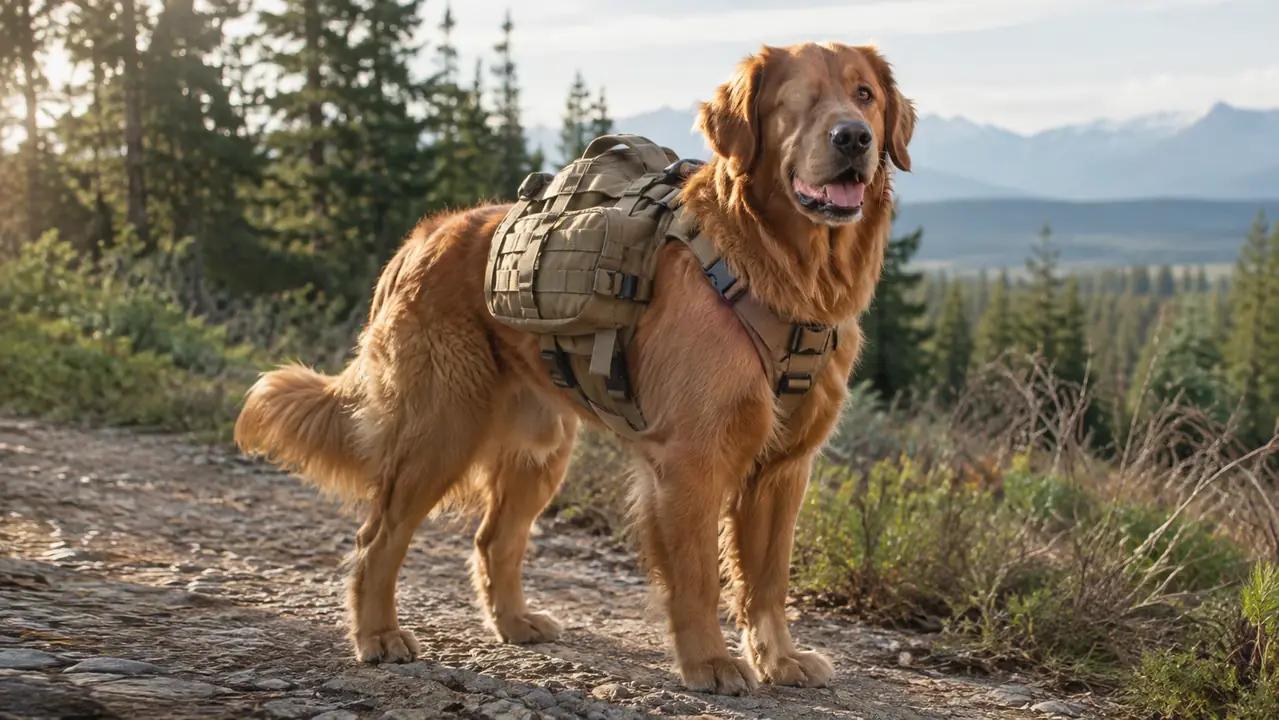
The first time I took Tucker out with a full pack on my back, I came home with a sore lower back and a list of things I swore I would never carry again. The second time, I let him carry some of it. That is the whole idea behind a dog backpack, and it is more practical than it sounds. You are not strapping a load onto your dog to show off. You are moving the light, bulky stuff out of your own pack so you can carry the water and the heavier gear yourself. I have been camping with my 55-pound hound mix Tucker for six years now, and the OneTigris Dog Backpack for Medium and Large Dogs is the one that finally made the system work.
Before you picture a dog struggling under a giant load, stop. A dog backpack is not a packhorse setup. The rule I use is simple: keep the total weight under a quarter of the dog's body weight, and for most trail days keep it closer to ten percent. For Tucker, that means about five or six pounds, and honestly most of what goes in his bags weighs a lot less than that. The win is not weight, it is volume. His pack swallows the stuff that used to rattle around in mine: his collapsible bowl, a half-empty water bottle, his food for the day, a tie-out stake, a small first aid kit. By the time we hit the trailhead, my pack is maybe eight pounds lighter and a whole lot easier to carry.
Lighten your own pack on the next trip
The OneTigris Dog Backpack for Medium and Large Dogs has the pockets, the padding, and the adjustment points to make this work. Check today's price on Amazon and see if it fits your dog's size.
Amazon Check Today's Price on Amazon →Step 1: Measure your dog and pick the right size
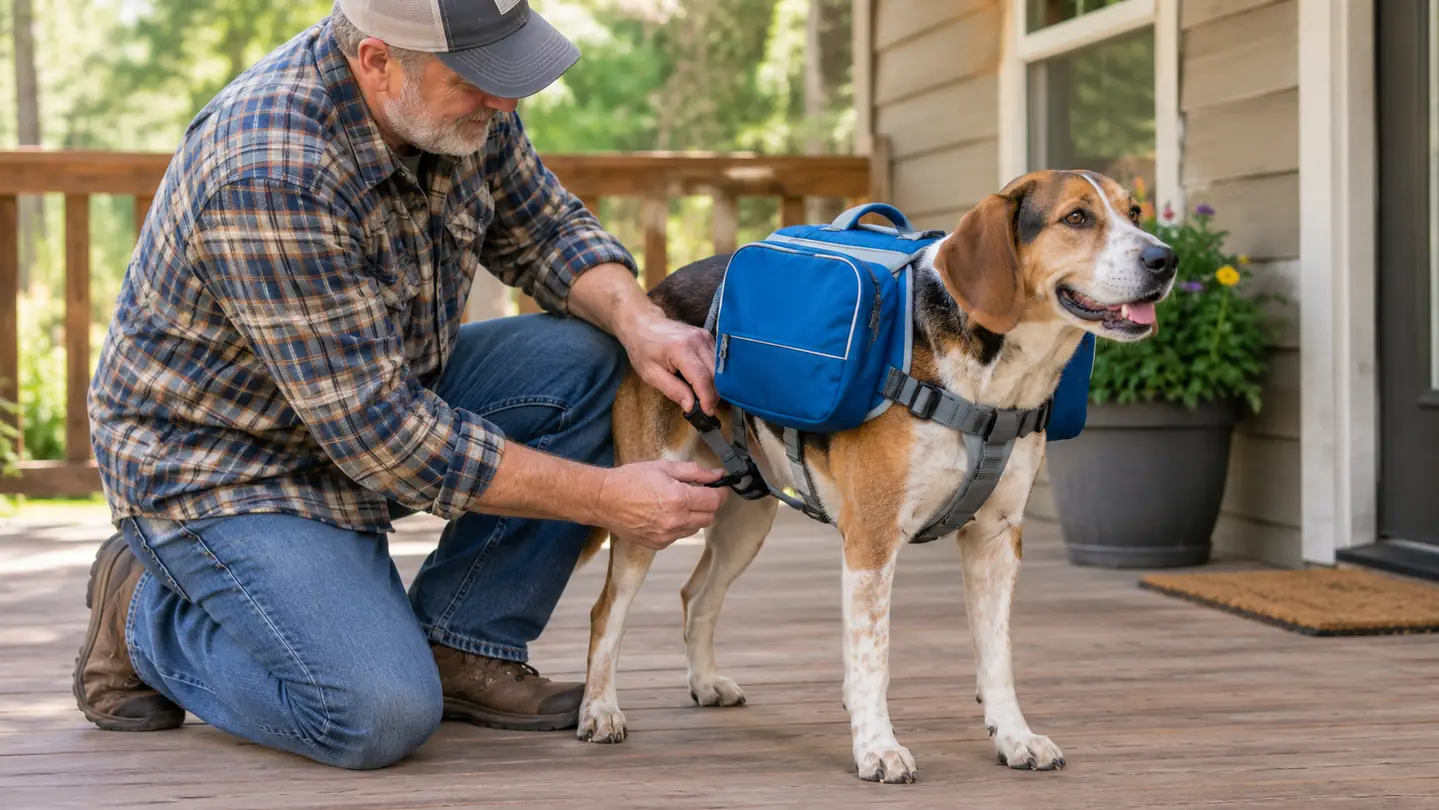
The OneTigris pack comes in sizes that track with chest girth, not weight, and that is the measurement you need to get right. Take a soft measuring tape and wrap it around the widest part of your dog's chest, right behind the front legs. Write that number down. Then measure the belly, just in front of the back legs. Compare both to the size chart on the product page. Tucker measures 28 inches around the chest and 24 around the belly, and the large size fits him with room to adjust. I made the mistake of guessing based on his weight the first time I ordered a pack, and I sent it back. The chest strap was too high and the whole thing shifted sideways the moment he trotted.
If your dog is between sizes, size up. A pack that is slightly too big can be cinched down at the chest and belly straps. A pack that is too small will ride up and rub under the armpits, and a dog with a rubbed spot will not wear it again. The OneTigris has padded panels on the chest and belly, which helps, but padding does not fix a bad fit. Take the ten minutes to measure before you order. It saves a return and it saves your dog from a bad first impression.
One more thing on sizing: the pack should sit close to the body without pinching. You should be able to slide two fingers flat under the chest strap. If you can fit your whole hand, it is too loose and the load will swing. If you cannot get two fingers in, it is too tight and your dog will be sore after an hour. I check the fit every time I load it, because the pack settles as the day goes on.
Step 2: Get your dog used to the pack before the trail
Do not put a loaded pack on a dog and head straight for the trailhead. That is the fastest way to create a dog that hides under the truck when he sees the pack. Start in the house or the yard. Let Tucker sniff the pack while it is empty, then buckle it on for five minutes while he walks around the kitchen. The next day, ten minutes in the yard. The day after that, a short walk around the block with the side pockets empty. He needs to learn that the pack is just part of getting ready, like the collar and the leash.
Once he is comfortable with the empty pack, add weight gradually. I started Tucker with a single empty water bottle in each side, then a full bottle on one side only, then balanced bottles on both sides. The key is balance. A dog pack with weight on one side will twist the harness and rub. I weigh the two sides on a kitchen scale before I load it, and I keep the difference under a couple of ounces. It sounds fussy, but a balanced load is the difference between a dog that trots happily and a dog that stops every fifty feet to try to bite the straps.
The other thing that helped was making the pack mean something good. For the first two weeks, Tucker only wore the pack when we were going somewhere fun: the park, the creek, a friend's property. He never wore it to the vet. Now when I pick the pack up off the hook, he comes over and stands still for it. That is the reaction you want. If your dog runs the other way when the pack comes out, you moved too fast. Go back to empty pack, shorter sessions, more treats.
Step 3: Load the light stuff, keep the heavy stuff on your back
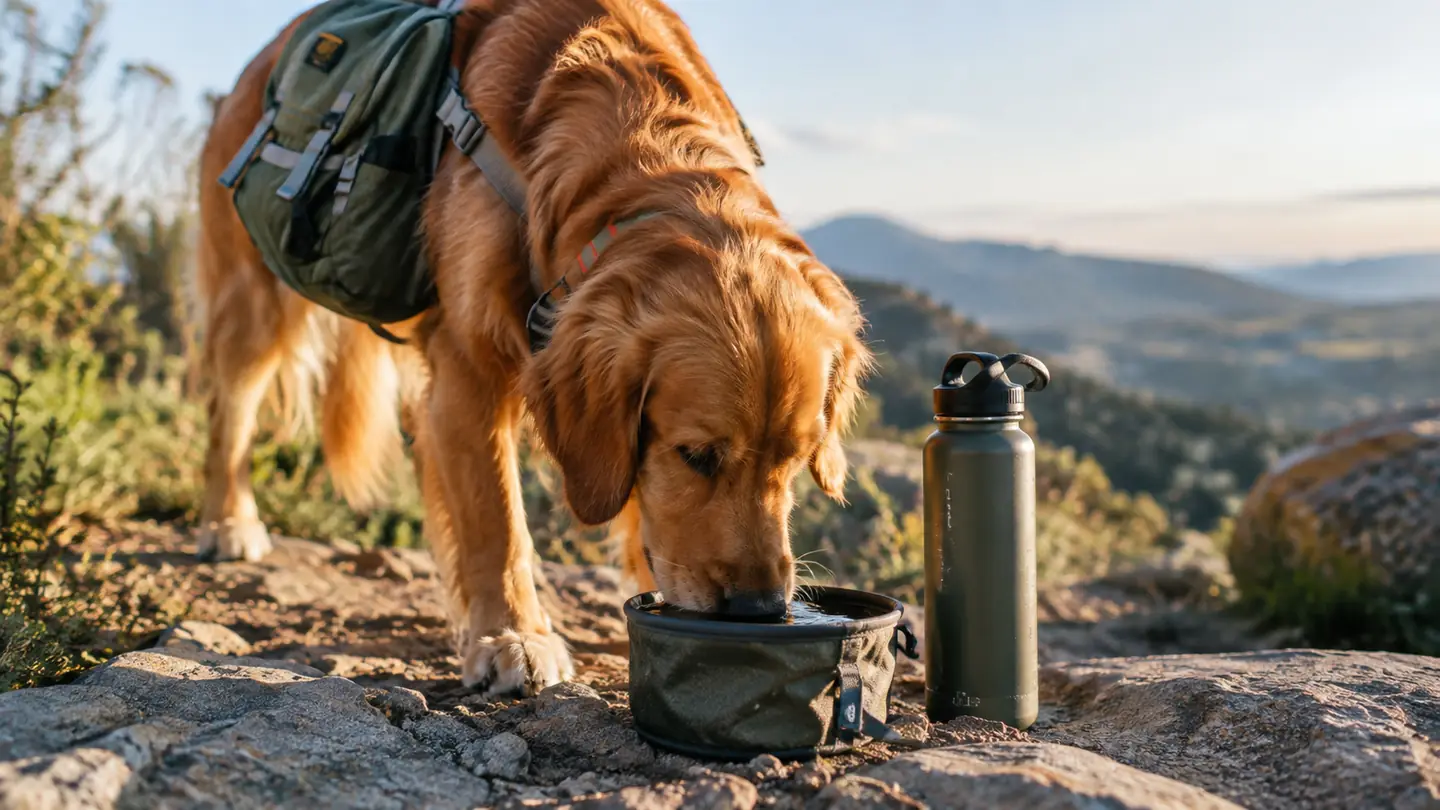
Here is the loading list I use for a full day out with Tucker. His side pockets carry his collapsible bowl, a 16-ounce water bottle, a day's worth of kibble in a zipper bag, a small first aid kit with bandage tape and tweezers, and a lightweight tie-out stake. That is roughly four pounds total. On my back I keep the two-liter water bladder, the heavier food for both of us, the camp stove, the rain shell, and the bear bag with the rope. The division is not about what is heavy. It is about what is bulky and light. The dog carries the stuff that takes up space but does not weigh much.
There are a few things I never put in Tucker's pack. No food that smells strong, because he will spend the whole hike trying to get at it. No hard or sharp objects, because a fall on a rocky trail could drive something into his back. No more than about ten percent of his body weight, which for him is five and a half pounds. And nothing that needs to stay dry, because the side pockets are not waterproof. I learned that one the hard way on a damp October hike when his pack held a dry change of socks for me. The socks came out wet. Now the rain cover for my pack lives in my own pack, and Tucker's load stays dry-friendly.
The other rule is about the top of the pack. The OneTigris has a small top pocket and some people load it with a phone or keys. I leave it empty. Anything hard sitting on top of a dog's back becomes a pressure point the moment the dog lies down or rolls on a log. Tucker has rolled over to scratch his back with the pack on, and I am glad there was nothing rigid in that top pocket. Keep the load soft and low, close to his center of gravity.
Step 4: Balance the load and check the straps on the trail
Before we leave the truck, I do a thirty-second check. I run my hands under the chest strap and the belly strap to make sure nothing has twisted. I lift the pack an inch and let it settle to see if it sits centered. I shake each side pocket to confirm the contents are not sliding around. Then I have Tucker trot a few steps on the flat ground by the parking lot and watch for the pack to shift. If it moves more than an inch in either direction, I stop and re-cinch before we start climbing.
On the trail, I check the straps at every water break. The chest strap is the one that works loose, especially on a dog that likes to duck under fallen trees. Tucker does that constantly, and a loose chest strap lets the whole pack rotate toward his shoulder. The fix takes ten seconds: pull the strap snug, make sure the buckle is flat against his chest, and move on. I also watch for chafing. If he starts rubbing his armpits against rocks or stopping to lick his chest, the pack is moving too much and we stop to adjust.
One thing I did not expect: the pack actually settled Tucker down on the trail. He is a hound mix with a nose that wants to go everywhere, and a little bit of weight on his back seems to give him a job. He walks steadier, he checks back with me more often, and he does not pull as hard on the leash. I have heard other owners say the same thing about working dogs. The pack turns a walk into a task, and a dog with a task is a happier dog.
Step 5: Know when to take the pack off
The pack comes off at the first rest stop that lasts more than ten minutes. If we stop for lunch on a rock overlook, Tucker gets unclipped and the pack comes off so he can lie flat and cool down. A dog wearing a pack cannot regulate heat as well, and a warm dog on a sunny trail is a dog that is one step from heat stress. I would rather take the pack off and on three times in an afternoon than push him to wear it the whole way.
I also take it off for anything technical. If the trail turns into a rock scramble or a steep descent with loose gravel, the pack comes off and I carry it over my shoulder for that section. It weighs almost nothing, and it keeps Tucker's center of gravity low when he needs to jump or balance. The same goes for water crossings. He swims well, but a loaded pack turns a swim into a struggle. Off it comes, I wade it across, and he swims free.
At the end of the day, the pack gets emptied before it comes off. I learned that from a friend who left a bag of kibble in his dog's pack overnight. The dog chewed through the pocket to get at it. Now I empty both side pockets, wipe out any crumbs, and hang the pack on a hook by the door. It takes two minutes and it keeps the pack from smelling like a buffet. A clean pack is also easier to check for wear, and I have caught a loose stitch on the belly strap before it became a problem on the trail.
What Else Helps
A dog backpack works best when the rest of your setup is already sorted. The OneTigris pack has a handle on top that I use to help Tucker over logs and up steep banks, and it doubles as a way to steady him when we cross a creek. I pair it with a six-foot leash and a wide collar, and I keep his tie-out stake in one of the side pockets so he is never wandering the campsite at night. Tucker runs cold and he will follow his nose off the site if he is not tied out, so the stake is part of the system, not an extra. If you camp with your dog, the pack is one piece of a routine that keeps him fed, watered, and safe.
The win is not weight, it is volume. His pack swallows the stuff that used to rattle around in mine, and by the time we hit the trailhead my own pack is eight pounds lighter.
Let your dog carry his share on your next hike
The OneTigris Dog Backpack for Medium and Large Dogs is the pack I reach for every time Tucker and I head out. Check today's price on Amazon and see if it fits your dog.
Amazon Check Today's Price on Amazon →