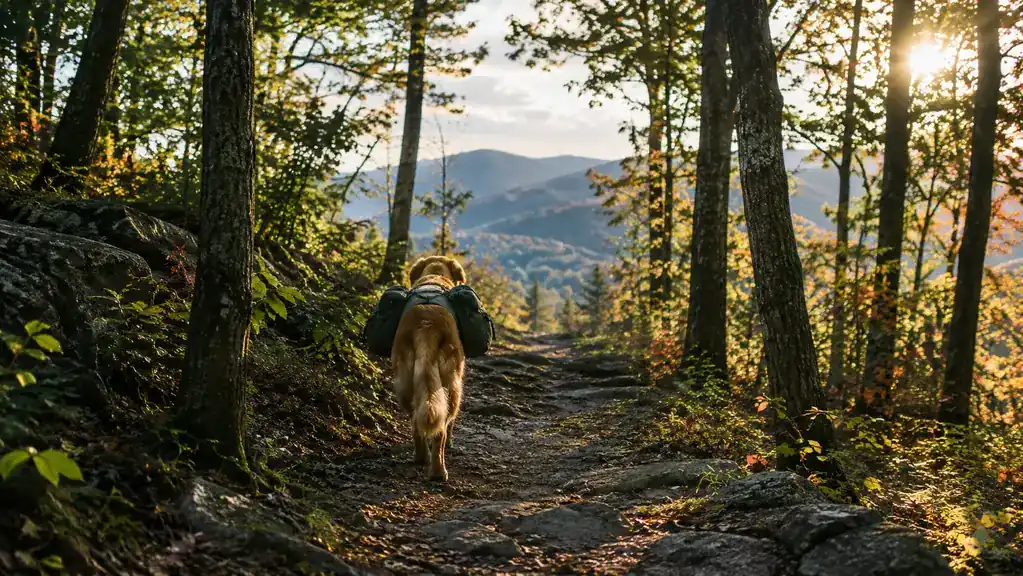
Three summers ago I carried Tucker's food, his water bowl, his tie-out, his stake, and his kibble on top of my own gear for a four-day loop near the Chattooga River, and by the second afternoon my shoulders were talking to me. Tucker, fifty-five pounds of hound, trotted along empty-handed, nose down, no job in the world. A guy at the next campsite asked why I had not tried a dog backpack. I made some joke about the dog earning his keep, and then I went home and spent a week reading reviews before I settled on the ONETIGRIS Dog Backpack. I have now run it through two full seasons, a dozen trips, and one long weekend where it rained every single day. This is the honest comparison: what the backpack actually changes, where carrying everything yourself still wins, and who should not buy one.
Here is the short answer. If you camp more than a handful of nights a year, your dog is a healthy adult over roughly forty pounds, and you are tired of hauling his gear on top of your own, let him carry it. It is not cruel, it is not lazy, and a dog with a job walks calmer than a dog with nothing to do. If your trips are short day hikes where his whole kit fits in your coat pockets, or if your dog is a puppy, a senior, or nursing an injury, leave the pack at home and carry it yourself. Neither of those is a compromise. They are different trips with different answers.
| ONETIGRIS Dog Backpack | Carrying Everything Yourself | |
|---|---|---|
| Who carries the load | The dog carries his own food, bowl, tie-out and stake; you keep the tent, stove and water | Every ounce is in your pack from trailhead to camp, plus his kit |
| Your pack weight | Shifts roughly four to six pounds off your back the moment he is loaded | No shift at all; your pack gets heavier with every extra night |
| Heat in August | Side pockets sit over the ribs; on a ninety-degree day the pack comes off until evening | Nothing on the dog at all, which is the honest win on hot afternoons |
| Camp setup | Tie-out, stake and water bowl come out of the pack in one trip; no walk back to the truck | Guaranteed second and third trips to the truck for the stuff you forgot |
| Money out of pocket | One pack, bought once, used for years | Nothing to buy; you already own your pack |
| Best for | Multi-day trips where the dog's own gear adds up | Day walks where his bowl and a bag of kibble fit in your coat |
Where the ONETIGRIS Wins
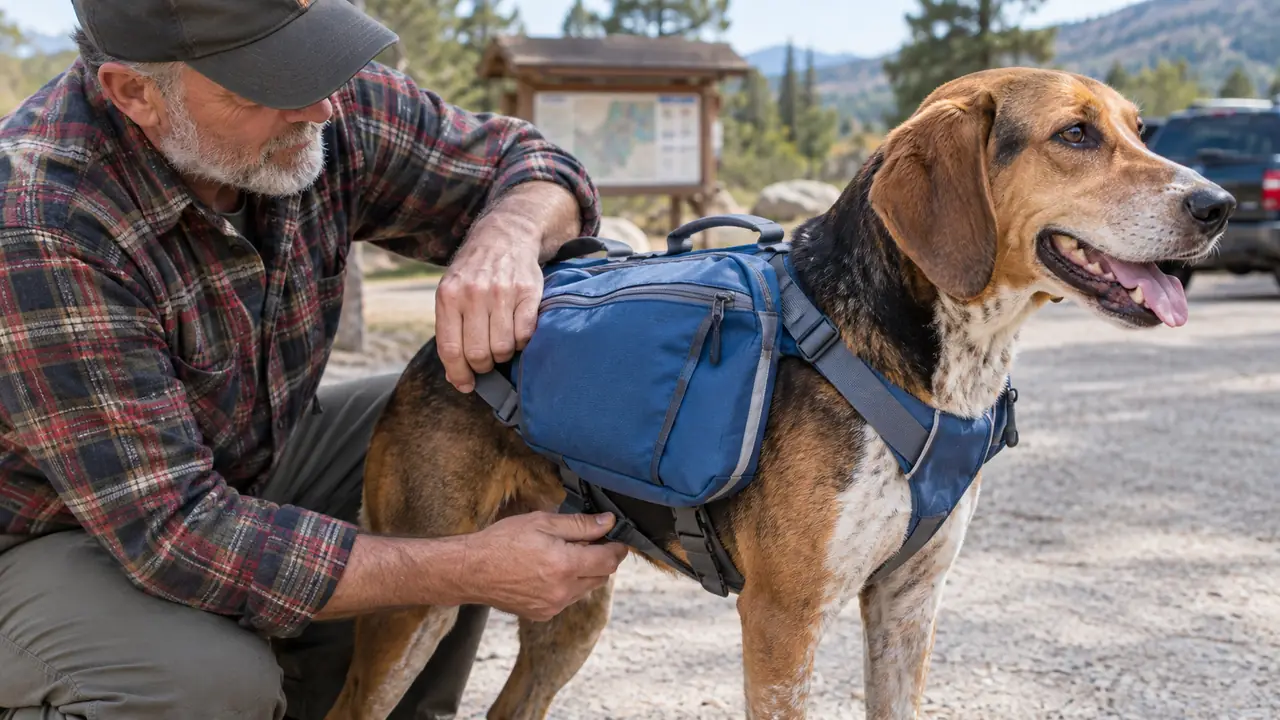
Start with the number that matters most: four to six pounds. That is what moved off my back and onto Tucker's the first time I loaded the pack right. His food bag goes in the left side pocket, his collapsible bowl and tie-out in the right, a water bottle clipped to the outside, and I balance the two sides so nothing swings when he moves. The shoulder straps tighten over his chest, the girth strap sits behind his ribs, and once it is buckled he stands there looking at me like he is waiting for orders. I weigh the two sides on the kitchen scale the first couple of trips, not to be fussy, but because an unbalanced pack will pull a dog off line within a mile. The first time he carried it, a Saturday in May up the Bartram Trail, he fell in beside me for forty minutes instead of ranging ahead of me. At camp he went straight to his bed instead of pacing the perimeter of the site. Same miles, same trail, different dog. I do not need the science to explain it. A dog with a job settles, and a dog that sees his bed at the end of a working day stays in it.
Let me tell you what I tried before I bought anything. That first season I lashed a soft-sided cooler to Tucker's back with a pair of bungee cords to save the money. It slid sideways on the first climb, chafed his ribs by the third mile, and by lunch he was walking with his shoulders dipped to one side just trying to keep it level. I took it off him and carried it myself for the rest of that weekend. That failure is the reason I bought a real pack with padded shoulder straps and a girth strap in the first place. The ONETIGRIS does not slide, it does not chafe, and it is built to hold a load that moves, which sounds like a small thing until you have watched a good piece of equipment do its job for ten straight miles.
The second win is the one you feel at the end of a long day, and it is about camp setup. Before the ONETIGRIS, making camp meant three trips between the site and the truck: one for the tent and the bags, one for the stove and the food, and one for the stake, the tie-out, the water bowl and the bag of kibble I had left in the cab. The truck is a full-size with a bed topper, which keeps the gear dry, but dry gear still has to get from the tailgate to the fire ring. On a wet trip in October, it rained for three days straight, and I made those three trips twice a day in the mud. Now Tucker's gear comes out of the pack in one pass. Stake in the ground, tie-out clipped, water poured, kibble measured. Four minutes of work instead of fifteen. On a Friday evening in November when the light is going out of the sky and the temperature is dropping, four minutes is the difference between eating before dark and eating by headlamp with a wet dog underfoot.
And there is one more thing that surprised me, because nobody warned me about it. A loaded dog does not wander as much. The pack does not replace a leash and it does not replace training, but on the trips where Tucker carries his own food he treats the camp like his posting. He checks the perimeter a couple of times, then he lies down with the pack in sight. Before the pack he was always at the edge of the site, nose working, thinking about the next ridge. Some of that is age and some of it may just be Tucker, but the difference from one season to the next was clear enough that I noticed it out on a Monday evening in April after a five-mile hike with full packs. He is still a hound and he still follows his nose when the tie-out is long. The pack just gives him a reason to settle once the work is done. That is worth more to me than the four pounds it takes off my shoulders.
Where Carrying Everything Yourself Wins
Now the honest part, because the ONETIGRIS is not the answer to every trip. In the middle of August, with the thermometer pushing ninety and the trail in full sun, the pack comes off Tucker before we leave the truck, and his gear rides in my pack instead. He runs hot. He is a hound with a short coat and no sense of moderation, and on a ninety-degree afternoon a load that is perfectly fine in May turns into a reason to stop and lie down in the first shady patch he can find. We have rules now. Pack off by ten in the morning. Pack on again after five. And on the genuinely hot days, he does not carry at all. I have stood at a trailhead in late July with the pack in my hands and put it back in the truck because the air did not feel right. I would rather carry his ten pounds myself than watch him suffer through a warm afternoon in a coat he cannot take off. If your only planned trip is a midsummer day hike in the low country, you do not need a dog backpack. You need a lighter pack of your own and a dog that stays unloaded.
The other honest win for carrying it yourself is the dog who should not pack weight. Tucker was four when I started him, and I worked him up slow: empty pack for the first mile, then a pound or two, then his full load over the course of three weeks. A puppy with growing joints does not need that kind of job, and a senior with stiffness in his hips does not need it either. If your dog is on either end of that scale, or carries any kind of injury, you carry the gear. There is no shame in it and no shortcut around it. The pack is a tool for a healthy adult dog, and it is a bad tool for everyone else. That is not a flaw in the gear, and it is not a knock on your dog. It is the gear being honest about what it is for, and you being honest about your dog. The day Tucker starts slowing down, the pack goes in the attic. I have already decided that, and I will not argue with it when the time comes.
And the last place carrying it yourself wins is the trips that are simply too short for the pack to earn its place. A two-hour walk from the trailhead to a spot by the creek, one night, no stake needed because the creek does the tethering. Tucker's whole kit fits in my coat: a bag of kibble, a collapsible bowl, a spare water bottle. On those trips I leave the ONETIGRIS in the truck and I do not feel bad about it. The pack costs a minute to fit and gives him a job, and a minute is a small price. But when the walk is short and the day is easy, I would rather have his back bare and his head clear. That is not against the backpack. That is picking the right tool for the afternoon, and half of good gear decisions are knowing when to leave a good piece of gear behind.
Let the dog carry his own load on the next trip
Two seasons in, the ONETIGRIS Dog Backpack has taken Tucker's food, bowl and tie-out off my back and put them where they belong. If your dog is a healthy adult, check today's price on Amazon and see whether the pack fits your next trip.
Amazon Check Today's Price on Amazon →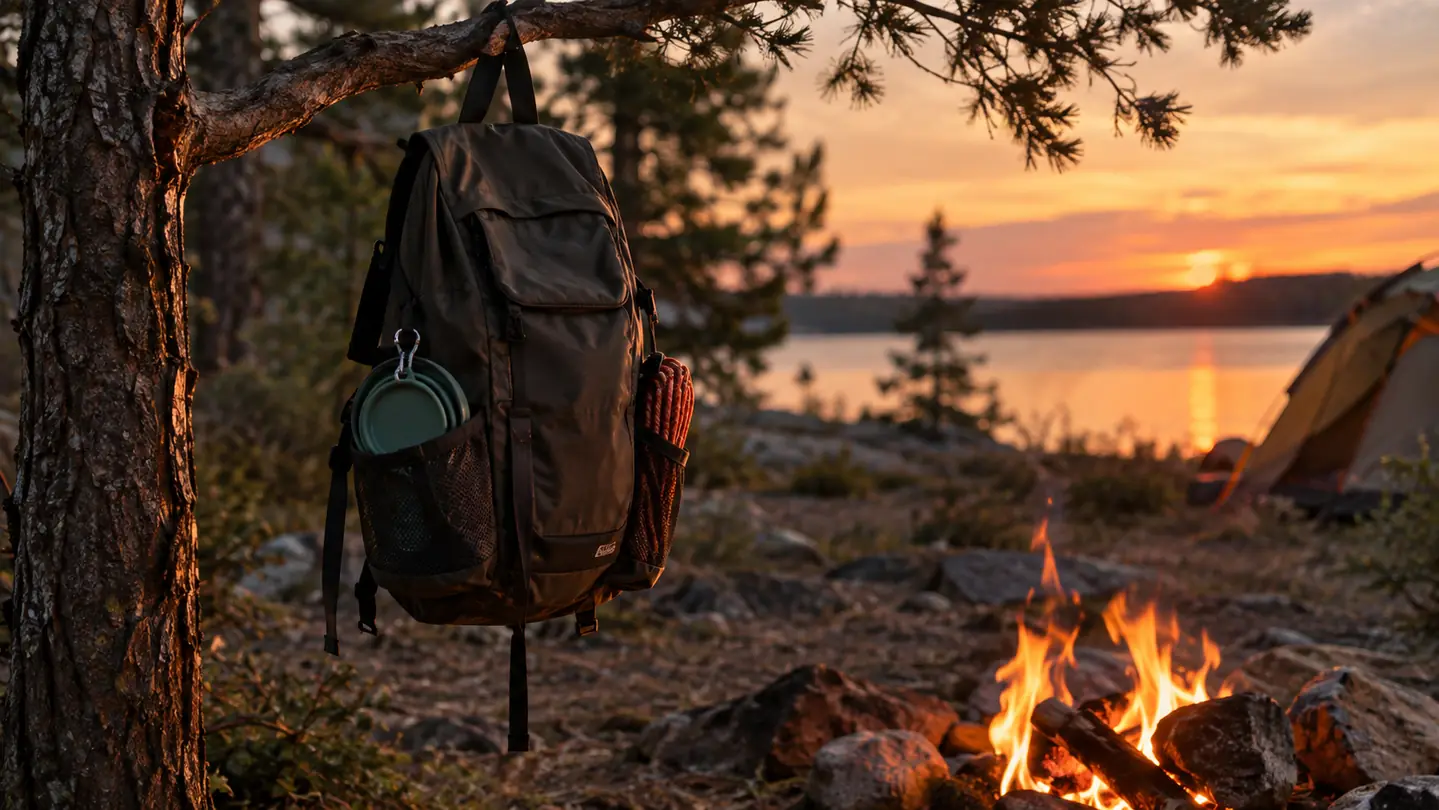
Who Should Buy Which
Buy the ONETIGRIS Dog Backpack if you camp more than a handful of nights a year, if your dog is a healthy adult over roughly forty pounds, and if you are tired of carrying his kit on top of your own. Buy it if you want a dog that settles at camp because he worked to get there. Buy it if you have ever stood at the tailgate in the rain trying to remember which trip you left the tie-out on. Skip it, and carry everything yourself, if your trips are short day hikes, if your dog is a puppy or a senior, or if you camp somewhere so hot that you would not wear a coat on your own back, because that is what a dog backpack is: a coat with pockets. For everyone in the middle, and that is most of us, the answer is not even close. Let the dog pack for himself, and give your own shoulders the day off.
One practical note before you order. Measure the dog, not the guess. Tucker is fifty-five pounds and wears a medium-large with the girth strap snugged up so the pack cannot slide sideways on him. If you find yourself between sizes, go up, because the strap adjustment gives you room to work, and a pack that is a touch big sits better than one that is a touch small. Load it even on both sides. A lopsided load will rub a sore spot in under an hour, and a sore dog will teach you that lesson exactly once. Check the fit during the first mile of the first trip, then adjust at the first rest stop. Do that once, and you will be set for the rest of the season.
That said, I would not hand you the backpack as a cure for a bigger problem. If your dog pulls on leash or bolts at the sight of a deer, a pack will not fix that. Fix the behavior first, then add the pack. The pack is a reward for a dog that already walks well, not a training tool for one that does not. Start with three or four short trips, keep the load light, and let the dog tell you when he is ready for more. Tucker did, and two seasons later I would not head up the trail without his pack in the truck.
Give the dog his own load, and give yourself a lighter one
The ONETIGRIS is the piece of gear I would replace first if it wore out tomorrow. Check today's price on Amazon and decide whether your dog's next trip is one where he packs for himself.
Amazon Check Today's Price on Amazon →