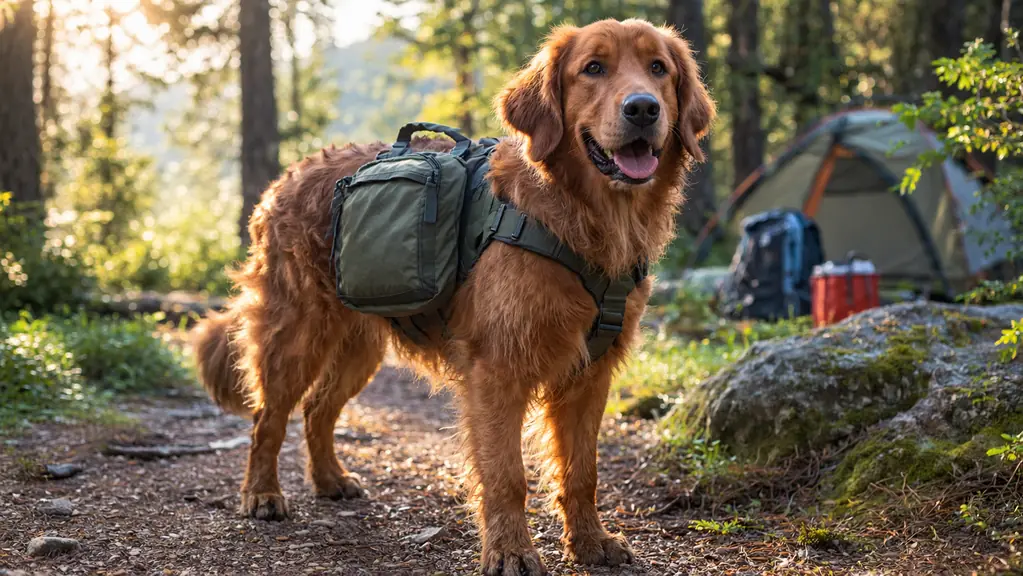
I'll be honest: I bought the OneTigris Dog Backpack mostly because Tucker looked ridiculous carrying nothing while I hauled everything. Six months later, after a dozen weekend trips in the Blue Ridge foothills, it has earned its spot in the truck. But it took some fiddling to get there, and there are a few things I'd want you to know before you hand your dog the job of pack mule.
Tucker is a 6-year-old hound mix, about 55 pounds, and he runs cold at night. He also follows his nose off the campsite the second I look away. So my test for any piece of dog gear is simple: does it make camping with him easier, or does it just add another thing to keep track of? The OneTigris backpack passed that test, but not on the first try.
The Quick Verdict
A tough, well-made pack that lets a healthy dog carry his own water and food. The straps need a patient first fitting, and you should not load it heavy, but for weekend trips it has been the most useful piece of dog gear I own.
Amazon Check Today's Price →Let your dog carry his own water for once
After six months of trail use, the OneTigris Dog Backpack is the gear I reach for first. It balances well, holds up to brush and weather, and Tucker actually seems to like wearing it. Check today's price on Amazon and see if it fits your dog's size.
Amazon Check Today's Price on Amazon →How I've Used It
I've had the OneTigris pack since early spring. In that time we've done state park campgrounds, national forest sites, and a few places where the trailhead is a mile of rough dirt road. Tucker wears it for the hike in, wears it around camp for a couple of hours, and gets it off before dinner. That's maybe 8 to 10 hours a weekend, every other weekend, for six months.
What goes in it: his collapsible bowl, a liter of water in two small bottles, a day's worth of kibble in a zipper bag, a roll of poop bags, and his first-aid kit. Total weight is around 6 pounds. I weigh it because the rule I use is simple: a healthy dog can carry about 10 to 12 percent of his body weight, and Tucker is 55 pounds, so I keep his load under 6. That leaves room for a jacket or a rain layer on cold mornings.
The pack has two side pockets and a top pocket. The side pockets are big enough for the water bottles and the bowl. The top pocket holds the kibble bag and the poop bags. There is also a small loop on the back that I use to clip a blinking light at dusk, which has been more useful than I expected on the walk back to the truck after dark.
Packing it right took some trial and error. Weight has to be even side to side, or the pack slides toward the heavy side and rubs under his front leg. I fill both water bottles to the same level, put the bowl in one side and his treats and poop bags in the other, and lift the pack by the handle before I put it on him to feel whether it hangs straight. If it tips, I move something. That ten-second check has saved us from a lot of stopping on the trail to readjust.
The Fit: Plan on a Patient First Fitting
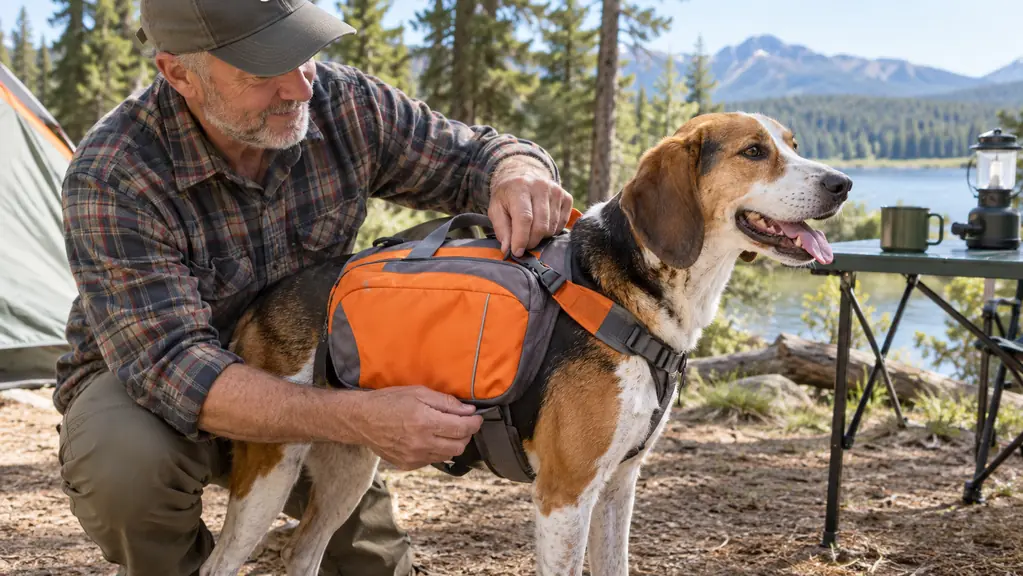
The first time I put the OneTigris pack on Tucker, I made every mistake available. I left the straps too loose, the pack slid sideways, and he stood there looking at me like I had broken him. The instructions are basic, and the adjustment points are not obvious until you have done it once.
Here is what I learned. The pack has a chest strap and a belly strap, and both need to be snug but not tight. You want to be able to slide two fingers under the belly strap. The chest strap sits just behind the front legs, and it does most of the work keeping the pack from sliding back. The side pockets should sit over the ribs, not over the hips. If the pack rides too far back, it will bounce on every step and your dog will hate it.
The first fitting took me about 20 minutes, mostly because Tucker kept sitting down. The second fitting took two. Now I can get it on him in under a minute, and he stands still for it because he knows it means we are going somewhere. That is the part I did not expect: the pack has become the signal that a hike is starting, and Tucker gets excited when he sees it come out of the truck.
After that first session, I let him wear the empty pack around the campsite for an evening before he ever carried anything. He sniffed at it, rolled once to try to get it off, and then forgot about it. By the next morning he walked out to the truck like he had worn it his whole life. If you skip the empty-pack step and load it up on the first day, you are asking the dog to deal with something new and something heavy at the same time, and some dogs will just sit down and refuse.
How It Holds Up on the Trail
The material is a heavy nylon that has taken a beating. We have pushed through rhododendron thickets, scrambled over rocks, and walked through a surprise thunderstorm that soaked everything in my pack. The OneTigris pack came through dry inside. The stitching has held, the zippers still work, and the buckles have not cracked in the cold. I have had cheaper dog packs where the plastic hardware gave out after a season. This one shows no signs of that.
The buckles are plastic, but they are thick, and none of them has cracked even after being stepped on at camp more than once. The zippers still run smoothly. I rinse sand out of them after beach and creek trips, which I think is why they have never jammed.
The one wear point to watch is the belly strap. It rubs against the dog's chest and against brush on narrow trails. After six months, the edge of the strap is starting to fray just a little. It is not a failure, and it has not affected the fit, but it is the first thing I would replace if it got worse. I would also check the stitching on the side pockets every few trips, because that is where the load sits.
Tucker has worn the pack in temperatures from the high 20s to the mid 80s. In the cold he runs warmer with it on, which is a bonus for a dog that shivers at night. In the heat I keep the load light and take it off at the first stream crossing. The pack does trap some heat against his back, so I do not leave it on for hours in the sun. That is a limitation, not a flaw, but it is worth knowing.
On warm days I watch him closely. The pack covers part of his back and sides, and that is extra insulation he does not need in July. On hikes above about 75 degrees, I take the pack off at every water stop, let him cool down for a few minutes and check under the straps for any rubbing or wet matted fur. If it is going to be truly hot, he does not wear it at all and I carry his water myself. The pack is a cool-weather and shoulder-season tool for us.
After six months and a dozen trips, the OneTigris pack has held up to everything the trail threw at it. The only wear I can find is a little fraying on the belly strap.
What Tucker Carries and What I Don't
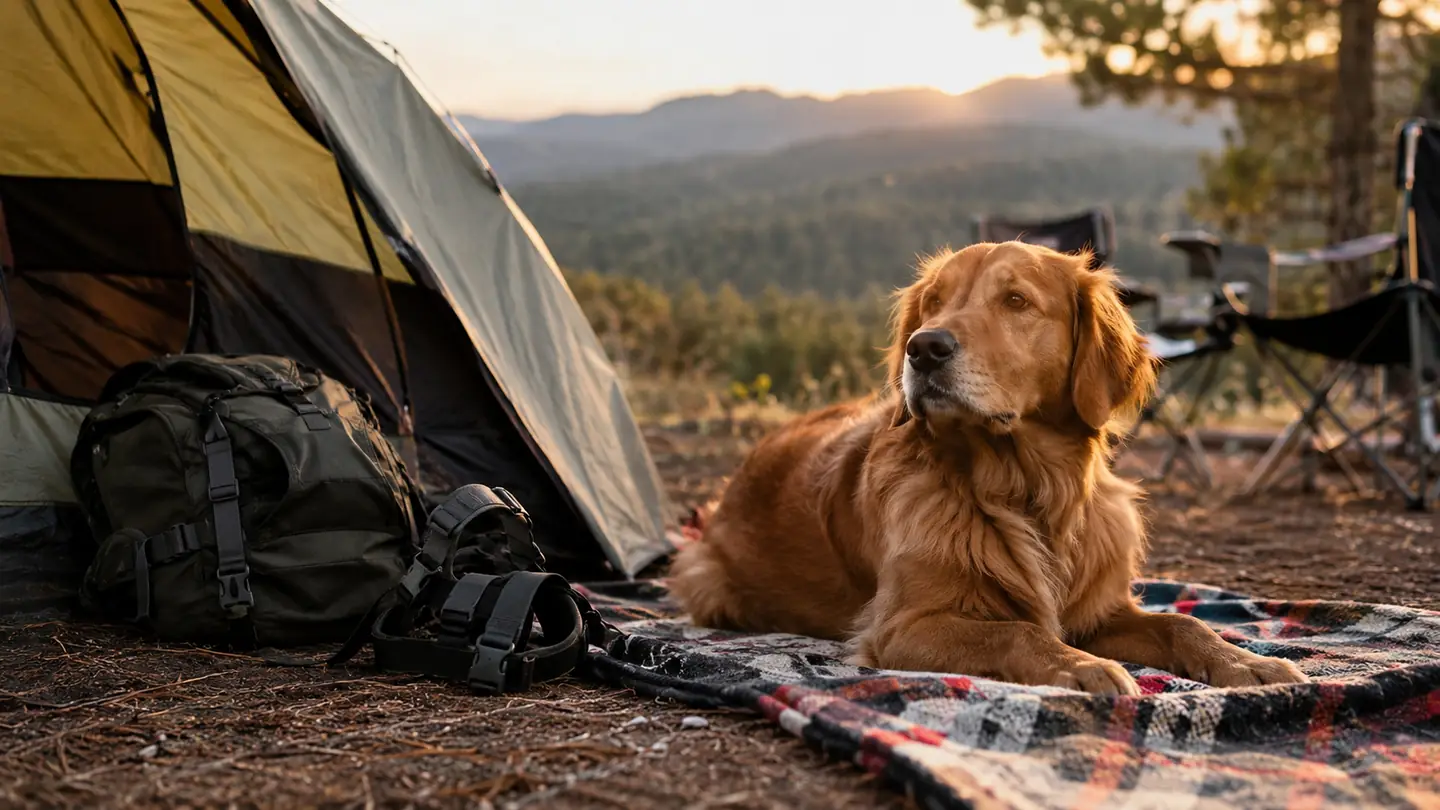
The point of a dog backpack is not to turn your dog into a pack animal. It is to let him carry the things that are his, so your pack has room for the things that are yours. Tucker carries his water, his bowl, his food, and his poop bags. I carry the tent, the stove, the sleeping bags, and everything else. That division has made our hikes more comfortable for both of us.
What I do not put in the pack: anything sharp, anything that could poke him if he lies down, and anything heavier than a couple of pounds on one side. I balance the side pockets carefully. A lopsided pack will rub and chafe, and it will make your dog walk funny. I also do not use the pack as a handle. The top loop is for a light or a tag, not for lifting a 55-pound dog. If Tucker needs help over a log, I help him with my hands under his chest.
As for weight, I keep what he carries light. A loaded pack should stay at a modest share of a dog's body weight, and for a dog Tucker's size, two bottles of water, a bowl and a few snacks are well under that. It is a good idea to ask your vet what is sensible for your own dog before you load a pack, especially if the dog is young, older or has had any joint trouble.
One thing I will say plainly: this pack is not for every dog. If your dog has hip or back problems, do not put a pack on him without asking your vet. If your dog is a puppy, wait until he is fully grown. And if your dog is the type who rolls in every mud puddle, be ready to hose the pack off. The nylon cleans up fine, but the straps hold water and take a while to dry.
Who This Is For
This OneTigris pack is for people who hike or camp with a healthy, medium to large dog and want the dog to carry his own gear. It is for the weekend camper who is tired of being the only one carrying anything. It is for the person whose dog has more energy than they do and needs a job on the trail. Tucker is calmer on the hike when he is carrying the pack. He has a purpose, and he walks better because of it.
It is also for the budget-aware camper. The OneTigris pack costs less than most packs with the same features, and it is built to last. I have seen packs at twice the price with thinner material and cheaper buckles. This one is the value pick, and it does not feel like a compromise.
It also suits the camper who wants the dog to have a job. Tucker walks differently with the pack on. He stays closer, he pulls less, and he seems to understand that we are working rather than wandering. That surprised me more than anything else about it, and it is the main reason the pack comes along even on short hikes where he carries almost nothing.
Who Should Skip It
Skip this pack if your dog is small, if your dog has joint problems, or if your dog is not used to wearing a harness. A dog that has never worn any kind of harness will need a few short practice sessions before a real hike. Start with the pack empty around the house, then in the yard, then on a short walk. If your dog hates it after that, do not force it. Some dogs just do not like wearing things, and that is fine.
Skip it if you only walk around the neighborhood. A pack is extra weight and extra heat for a dog that does not need to carry anything. And skip it if you are looking for a piece of gear that will fix a pulling problem. This is a pack, not a training tool. It will not stop your dog from pulling on the leash, and it should not be used as one.
What I Liked
- Tough nylon that has survived six months of brush, rocks, and rain
- Balances well when loaded evenly, no bouncing on the trail
- Comfortable for the dog once the straps are fitted properly
- Good value for the price, built better than packs at twice the cost
- The pack doubles as a signal to the dog that a hike is starting
Where It Falls Short
- First fitting takes patience and a few adjustments
- Belly strap shows early wear after heavy use
- Traps heat against the dog's back in warm weather
- Not a training tool and not for dogs with joint issues
Give your dog a job on the next hike
The OneTigris Dog Backpack has made our trips easier for six months, and it is still going strong. If you have a healthy medium or large dog, this is the pack I would buy again. Check today's price on Amazon and see if it is the right fit for your camping setup.
Amazon Check Today's Price on Amazon →