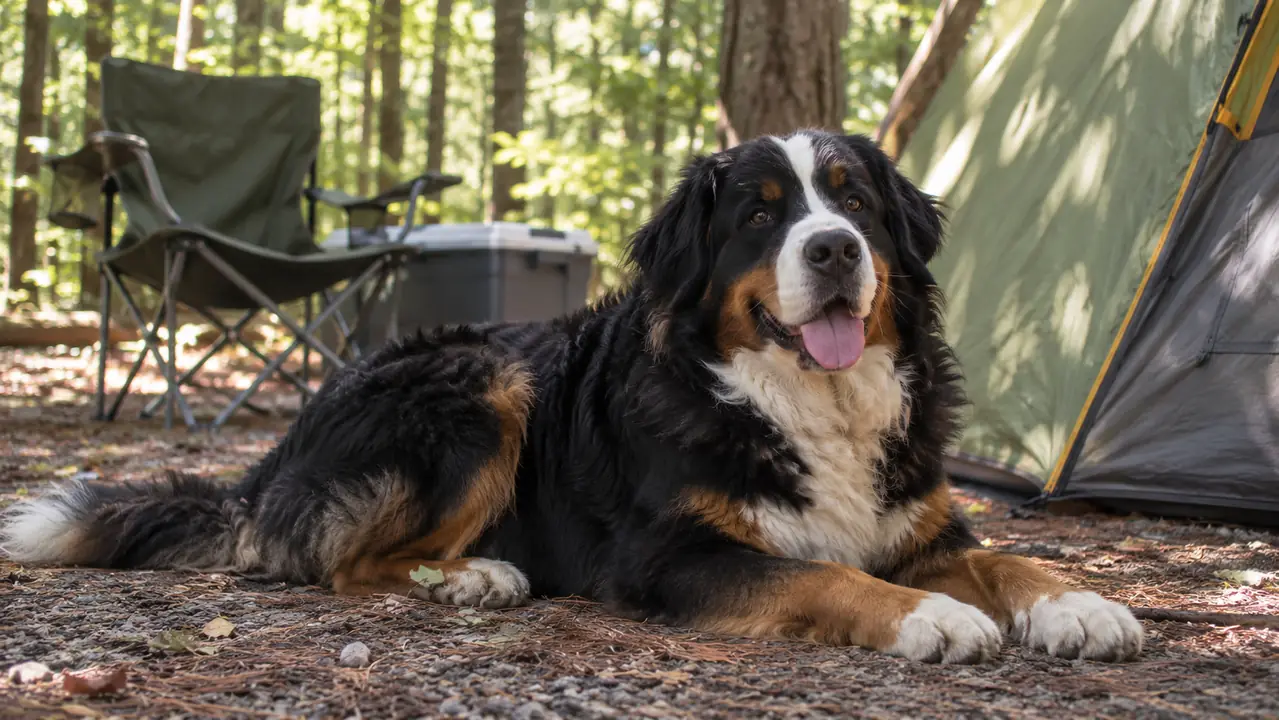
The first hot weekend I camped with Biscuit, I did what most people do. I filled a bowl at the spigot, set it beside my camp chair, and went back to setting up. By midafternoon she was flat in the shade with her tongue in the dirt, and I honestly could not tell you whether she had taken a drink in four hours. She had not, as it turned out. The bowl was in the sun, ten feet from where she wanted to be, and she is not a dog who leaves a cool spot to go looking for anything.
That is the part nobody tells you about camping with a dog in warm weather. Dogs do not drink on a schedule the way we do. They take two or three quick laps between things that smell interesting, and if the water is not within a few steps of wherever they have decided to lie down, they skip it. A collapsible bowl is not a cute accessory. It is the reason water can be in six places at once. I have run the SLSON two-pack through three camping seasons out of the back of my Forester, and these five steps are the routine I actually follow, not the one I would hand you if I were trying to sound organized.
Two bowls, two carabiners, one clipped to the leash before you pull out of the driveway
The SLSON collapsible bowls fold to half an inch and hold twelve fluid ounces each, so water can be at the tent, at the chair and on the trail without a hard bowl rattling around in your pack.
Amazon Check Today's Price on Amazon →Why the Bowl Matters More Than the Jug
People spend a lot of energy on water storage and almost none on water delivery. I have watched campers haul a five gallon jug to a site and then pour it into one bowl next to the cooler, which is the same as having one bowl. The bottleneck is never how much water you brought. It is whether the dog can reach it without leaving the spot where the dog has already decided to be comfortable.
That is the argument for a folding bowl over a hard one. A hard bowl takes up the same space full as empty, and it does not clip to anything, so it lives on the picnic table and gets knocked over twice a day. A bowl that folds to half an inch and hangs off a carabiner can go where the dog is. Each SLSON bowl weighs about 3.5 ounces, which means I stopped negotiating with myself about whether it was worth carrying a second one.
Step 1: Get a Bowl That Folds Flat and Holds a Real Drink
The first thing to check is capacity, not how small it packs. The SLSON bowls hold twelve fluid ounces each when expanded, at roughly 5.1 by 3.5 by 2.1 inches. For a forty-five pound dog that is a solid stop-and-drink portion, enough that she can take what she wants and leave the rest, so I am not standing over her rationing it. A bowl that only holds a few ounces means you are refilling constantly, and every refill is a chance for the dog to wander off.
Folded, they come down to about half an inch and about 3.5 ounces of weight. That matters more than it sounds. I keep one in the door pocket of the Forester and one in the camp bin, and I forget both are there until I need them. The material is a soft plastic, which is the reason it can crush down and spring back without cracking, and the listing carries a two year warranty, which I have not had to use.
One honest note. Soft plastic is not chew proof. Biscuit has never gone after a bowl, but if your dog treats anything on the ground as a toy, do not leave a full bowl unattended with them. Set it down, let them drink, pick it back up. That is the whole routine and it takes about ninety seconds.
Step 2: Clip It Where the Dog Already Is
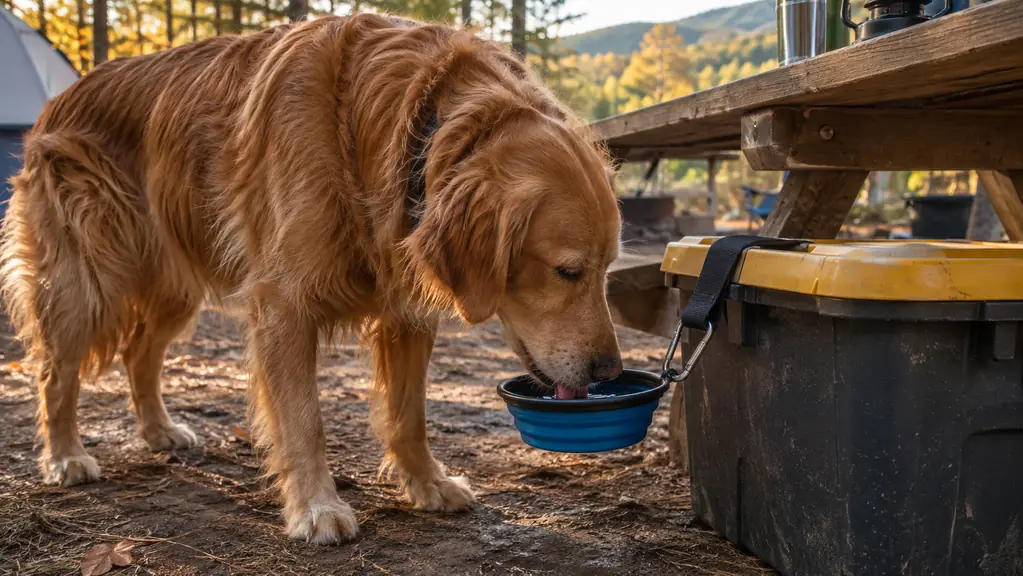
The SLSON bowls come with two carabiners, and the carabiner is the part that makes the whole thing work. I clip one to the leash loop at the start of a walk and one to the webbing handle of the camp bin. On the trail, the leash bowl means I can stop, unclip, pop it open, pour from my bottle, and be moving again in under a minute. No digging through a pack, no setting a bag down in the middle of the path.
In camp, I hang one from the loop on the outside of the bin and park the bin in the shade near the tent. The dog finds water without crossing the site. The second bowl rotates. Sometimes it is at my chair, sometimes it goes in the car for the drive home. The rule I follow is that I never put a bowl somewhere I would not want to walk to in the dark.
Clip it low enough that a dog standing normally can reach it without stretching, and high enough that it is not sitting in the dirt or getting stepped on. I clip to the bin handle, open the bowl, and let it hang. That is the height that has worked for me across three seasons, and I have not had a knocked-over bowl since I started doing it.
Step 3: Water Before the Heat, Not After
The mistake I made for two seasons was offering water when the dog looked thirsty. By then she was already behind. Now I offer it on a schedule that follows the sun, not the dog's behavior. First thing in the morning, before the walk. Again right after the walk, before she has a chance to lie down and fall asleep. Then at two in the afternoon, which in a Tennessee July is the hour that matters most.
That afternoon stop is not optional. Biscuit runs warm. She is a working-breed mix with a heavy coat, and she will happily keep going past the point where she should. A bowl of water in front of her at two o'clock, in the shade, gets a long drink out of her that she would never have gotten up to find on her own. If she turns her nose up at it, I splash a little on her chest and feet and try again in ten minutes.
I also stop offering big drinks in the hour before bed. A dog that tanks up at nine at night is a dog who needs to go out at two in the morning, and getting out of a sleeping bag to unzip a tent in the dark is not my favorite part of camping. Small, frequent drinks during the day, tapering in the evening. That schedule has cut the middle-of-the-night wake-ups down to almost nothing, and Ray notices the difference even when he is half asleep.
Step 4: Make It Easy for a Distracted Dog to Say Yes
Some dogs will drink anything, anywhere. Others want the water they know. Biscuit is in the second group. On the first day of a trip she will sniff a bowl and walk away, and then I am the person at the campground worrying about dehydration by dinner. What works for her is bringing water from home for day one and mixing it with the campground water gradually. Sounds fussy. It takes one extra jug.
The other thing that works is competition. If I set a bowl down and pretend it is mine, she wants it. If I dunk my hand in it and let her lick my fingers, she will drink. A dog that turns her nose up at a bowl on the ground will often take water off a wet hand. That is not a trained behavior, it is just how she is, and I use it without guilt.
Keep the bowl out of direct sun. Water sitting in the open at midday gets warm fast, and a warm bowl of water is the last thing a hot dog wants. Shade, the shadow of the car, or underneath the picnic table. The bowl does not care where it goes because it clips to anything with a loop. Use that instead of arguing with the dog.
A dog will not leave the shade to go find water. So I stopped putting the bowl in one place and started clipping it to the six places she already lies down.
Step 5: Have a Plan for the Night and the Drive Home
Night is the part I got wrong longest. Temperatures in western North Carolina drop fast once the sun goes down, even in August, and Biscuit gets restless and cold. A dog that is a little dehydrated and a little cold is a dog who paces around the tent. I keep a bowl of water at the tent door and offer it once before I turn in. She usually takes a few laps and settles.
The drive home matters too. People pack up, drive three hours, and never offer the dog a drink. I keep one SLSON bowl in the door pocket with a bottle of water, and I stop once at the halfway point, unclip, and set it down on the pavement away from the traffic side. Five minutes. She drinks, we get back in, and she sleeps the rest of the way instead of panting on my shoulder.
Last thing. Wash them. The bowls fold down flat and they rinse out in a minute at the spigot, but a bowl that sits in a hot car with a little water left in the folds gets a smell you will not get out easily. I rinse both at the end of every trip and leave them open to dry. Three seasons in, both are still in the rotation.
What Else Helps
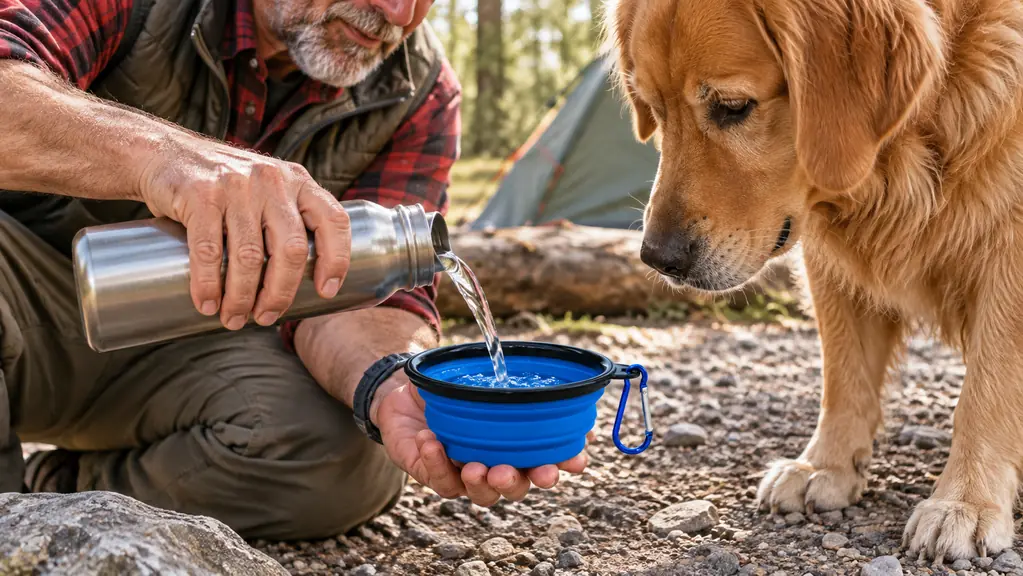
A collapsible bowl is the piece that makes the rest of the system work, but it is not the whole system. I carry a one liter bottle for Biscuit in addition to our own water, and I add a couple of ice cubes to it in the morning so the first pour at the trailhead is cool. I also keep a folded bandana in the camp bin and wet it down for her chest and paws when it is brutal out. She hates it for about four seconds and then she stands still for it.
I also watch her gums and her scruff. Gums that go from pink to pale or tacky are the sign I look for, and a scruff that does not spring back when I pinch it means we are behind. That is a pack-up-and-go-home signal, not a push-through-it signal. I have used it once, on a July trip near the Ocoee, and we were home by four in the afternoon and she was fine by evening.
The second bowl earns its keep at mealtime. It holds about 1.5 cups of kibble, which is a full meal for Biscuit, and because it folds flat I stopped carrying a separate food dish two years ago. One bowl for water on the trail, one for dinner at the site, both clipped to the same bin when they are not in use. That is the entire dog dish inventory I bring now.
What I'd Skip
There is a lot of gear sold for this that I do not own and do not want. I do not carry a battery powered water bowl, because I have never been at a campsite where I could not pour from a bottle. I do not carry a dog water bottle with a built-in trough, because it is one more thing to wash and it holds less than a bottle plus a folding bowl. And I do not bother with a bowl that clips to the dog's collar. The dog wears it, it swings, and it is empty by the time you need it. Clip to your own gear instead.
The one piece of camp gear I would hand you before anything else in my bin
Two SLSON bowls, two carabiners, twelve fluid ounces each, folded down to half an inch in the door pocket of the car. If you camp with a dog in warm weather, this is the thing that changes the trip.
Amazon Check Today's Price on Amazon →