
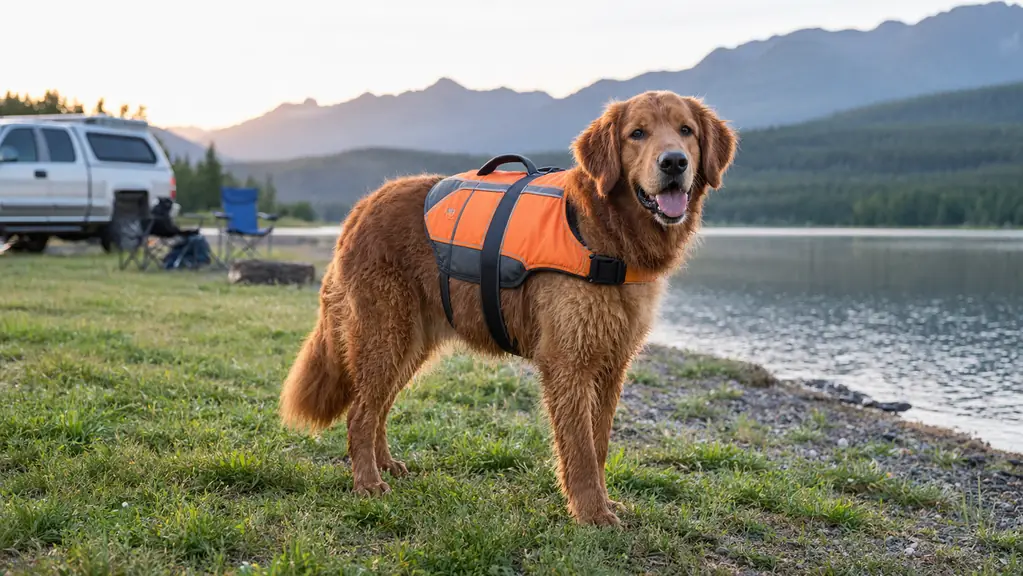
The first time I took Tucker to the lake, I figured a dog that can swim is a dog that is safe. He waded in, paddled a circle, and came back to shore grinning. Then he got tired about thirty feet out, and I watched his head dip once before he corrected. That dip was enough. I ordered a life jacket that same night, and I have not launched the boat without one since.
A dog life jacket is not a toy and it is not a fashion statement. It is flotation for a creature that does not always know when it is in trouble. Most dogs can swim, but swimming and staying safe are two different things, especially at a lake with drop-offs, cold water, and other boats. Tucker is a six-year-old hound mix, about 55 pounds. He runs cold at night and he follows his nose anywhere, which means the water is the one place I want a little more control over the situation. The Outward Hound Granby is the jacket I settled on after a couple of cheap ones let me down. Most of the gear I carry for him was bought after a specific scare, and the vest is no different. If you camp with a dog, this is one of those small items that quietly removes a whole category of worry from the trip. The five steps below are the routine I use every time we are near the water.
Start with the jacket that has ridden in Tucker's kit for three seasons
The Outward Hound Granby fits him properly, floats him high in the water, and has held up to lakes, rivers, and the bed of my truck. Measure your dog against the size chart before you order and you will know whether it fits before it arrives. It is the one I reach for every single trip.
Amazon Check Today's Price on Amazon →Step 1: Measure your dog before you buy anything
The single biggest mistake I see at the boat ramp is a vest that does not fit. A loose jacket rides up over the shoulders and lets a dog slip right out of it in the water. A tight one chafes and makes a dog fight the water instead of swimming in it. Both are dangerous in different ways, and both are easy to avoid with a tape measure and ten minutes of patience. I have also seen a jacket that fit fine in the driveway ride up the first time a dog hit the water, which is why the fit test matters more than the label on the collar.
Measure the widest part of the chest, right behind the front legs, and the length from the base of the neck to the base of the tail. Write those numbers down and compare them to the size chart, because the size chart will beat your guess every time. Tucker sits right in the middle of the Large range for most jackets, but the tape settled it faster than my eyeball ever did.
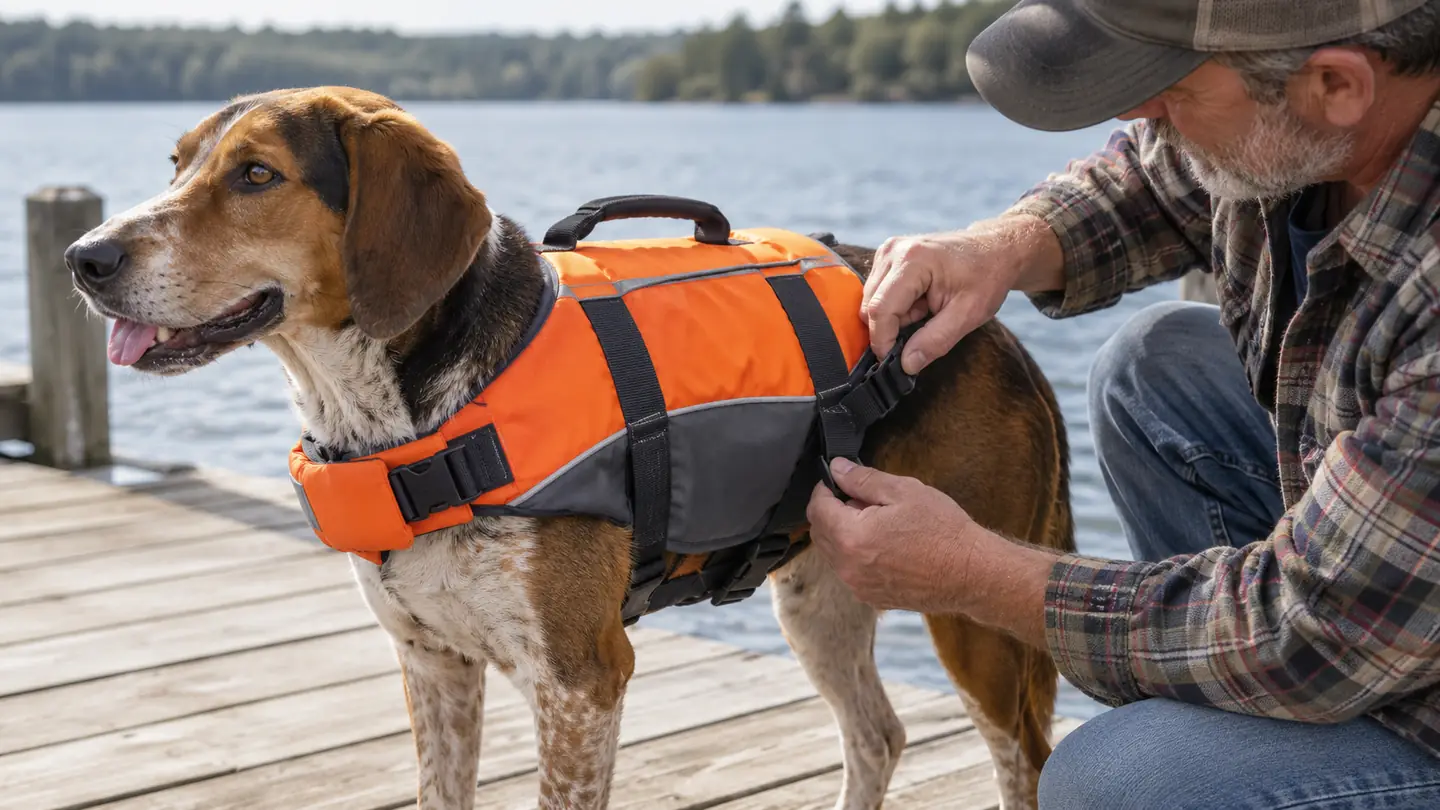
The fit test is simple. With the jacket on, you should not be able to pull it over the dog's head, but you should be able to slide two fingers flat under the straps. When you lift the grab handle, the jacket should lift with the dog, not ride up over the shoulders. If it shifts more than an inch, adjust the straps or size down. The Granby has a good range of adjustment, and I have watched it fit a stocky hound and a slim retriever with the same shell.
Step 2: Break the jacket in on dry land first
Do not put a new vest on a dog and expect him to swim in it. The jacket feels strange at first, like a blanket that will not let go. Tucker walked stiff-legged the first time I buckled it, stopped, and gave me a look that said he was reconsidering the whole camping arrangement. I did not blame him. I just did not give him a vote.
So we wore it around the campsite for an afternoon before the water was involved. He got fed in it, he napped in it, and he chased a tennis ball in it until the jacket was just part of the day. You want the vest to be boring by the time the water matters. A dog that associates the jacket with normal walking and treats will not panic and claw at the straps when he is suddenly in the lake.
Use the dry run to check the hardware, too. The Outward Hound Granby has a sturdy grab handle sewn across the back, and I have pulled Tucker out of the water with it more than once. Buckle every clip and give it a good tug. A buckle that clicks clean on land will usually click clean in the water, and a buckle that is stiff now will only get worse once it is wet and sandy. And each time you buckle it, make sure the straps sit flat across the belly so nothing twists.
Step 3: Start in calm, shallow water
The first swim should not be the big lake on a crowded Saturday. Find a shallow, slow-moving stretch where the dog can touch bottom and where you can stand right beside him. Let him wade in on his own. Do not throw him in, and do not carry him past his depth. The goal is a good first experience, not a dramatic rescue that teaches him the water is scary. A steep bank and a dock with a ladder are two different worlds for a dog that is still learning the jacket.
Some dogs take to the jacket right away. Others, especially hounds that would rather follow a nose than swim, need to be shown that the water is a good place. I wade in with Tucker up to my knees and let him paddle a circle around me before he decides it is fine. Ten minutes of that builds more confidence than an hour of being told.
Stay within arm's reach for the first few sessions. You are not just teaching the dog to swim in a jacket. You are teaching both of you how the jacket behaves in the water. Watch how high it floats him and how he holds his head. That is your baseline, and it will tell you later when something is off. A dog that normally swims high and suddenly rides low in the water is a dog telling you he is done. That baseline has saved us more than once.
Step 4: Read the water before you trust it
The jacket keeps a dog afloat, but it is not a lifeguard. Currents, cold water, and fatigue will beat a life jacket if you ignore them. I have watched a calm-looking river move a large dog downstream faster than his owner could walk along the bank. The vest bought him time, but the current was always going to win the argument. Know what the water is doing before you let the dog in. When in doubt, keep the dog in the cove and out of the current.
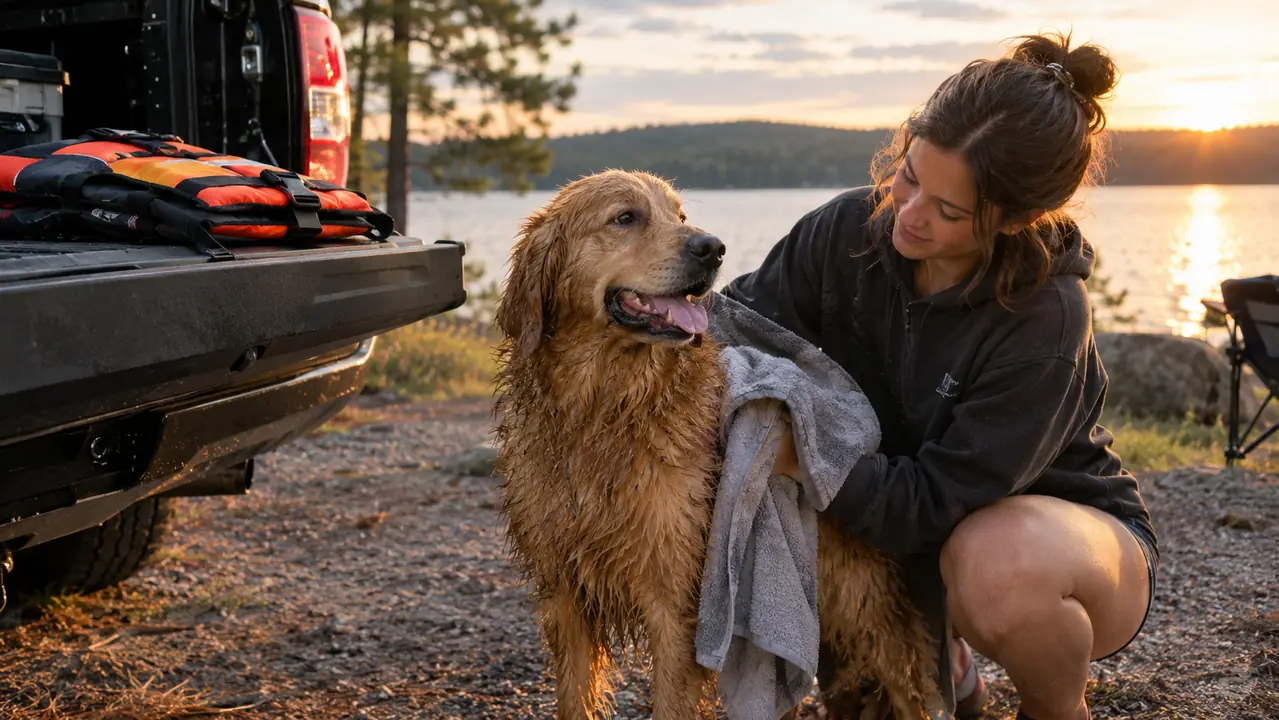
Cold water is the quiet danger. Tucker runs cold on land, and he loses strength fast in a cold lake. At a place like Lake Jocassee, the deep water stays cold even in July. If the air is chilly, keep the first swim short and have a towel and a warm spot ready before he gets out. The full-belly coverage on the Outward Hound Granby helps hold a little warmth, but the jacket is not a wetsuit. Treat it as an extra edge, not a guarantee.
Learn the signs that a dog is done. The tail stops wagging and starts drifting, the head rides lower, and the front paws scull harder than the back paws. That is the moment to head in, not the moment to push for one more fetch. A tired dog wearing a jacket is still a tired dog. The jacket is why he made it back to shore, and you are why he did not test the limit a second time.
Step 5: Rinse, dry, and check it every time you pack up
After every trip to the water, I rinse Tucker's Granby with fresh water and hang it over the tailgate to dry. Lake water, sand, and sunscreen break down fabric and buckles over time. A jacket that gets stored wet will also carry a smell that no dog will want to wear again, which turns the next trip into a fight before you even reach the shore. A second towel just for the vest keeps the good towel dry for the dog.
Once a season, go over the whole jacket. Check the straps for fraying, the buckles for cracks, and the seams around the grab handle. Give the reflective strips a look, too. If anything looks faded, stiff, or split, replace the jacket. Velcro that barely grips and zippers that catch are both signs the jacket has done its job. A life jacket is gear you hope you never truly need, which is exactly why it has to be ready on the day you do.
I keep the Outward Hound Granby in the truck bed topper all summer, right next to the tow strap and the spare towel. I rinse it and recheck it the same way I check the spare tire. It takes five minutes, and it is the cheapest insurance I have ever bought for a dog that thinks every body of water is his personal fountain.
What Else Helps
A life jacket does its best work with a few things around it. I keep a long, water-rated lead in the kit so Tucker can swim a little while I still have a line on him, especially at a new spot. A towel that lives in the truck permanently. A dry set of clothes for the ride home. And a folding bowl with fresh water, because a dog that has been lapping lake water will drink plenty of it and regret it later.
If you are still deciding whether a vest belongs in your truck at all, here are the [ten reasons it earns the space on any lake day](10-reasons-a-dog-life-jacket-is-worth-it-at-the-lake). If you want the long version of how this specific jacket has held up through real use, my [full review of the Outward Hound Granby](outward-hound-granby-life-jacket-review-long-term) covers three seasons of it. And for the short before-and-after, the [comparison piece](dog-life-jacket-vs-no-vest-at-the-lake) looks at the same stretch of water with and without a jacket.
One more thing: the jacket does not replace a leash, a fence, or good judgment. It buys time and keeps a dog on the surface while you get to him. That is the whole job, and it is a big one. I would rather carry the extra two pounds in the truck than spend one afternoon wondering whether I should have.
A tired dog wearing a jacket is still a tired dog. The jacket is why he made it back to shore, and you are why he did not test the limit a second time.
Do the five-minute fit check before you load the truck
Measure your dog, run the dry-land test, and hit the water with one less thing to worry about. The Outward Hound Granby is the jacket I reach for every single trip, and it is the one I would buy again tomorrow.
Amazon Check Today's Price on Amazon →